
How Can I Incorporate Universal Design Principles into My Kitchen?
A kitchen should feel comfortable and functional for everyone, regardless of age, mobility, or experience. This is the guiding idea behind universal design. It focuses on creating spaces that are easy to use, safe to navigate, and adaptable to different needs. A universal design kitchen ensures that cooking, cleaning, and moving around feel natural and accessible for every member of the household. Whether you are planning a remodel or looking to future proof your home, incorporating these principles can make your kitchen more inviting and practical.
Universal design is not about making the kitchen look clinical or overly simplified. Instead, it blends thoughtful planning with smart choices that improve usability. Many homeowners appreciate how subtle changes can transform the way their kitchen works. Understanding these concepts helps you build a space that supports comfort, safety, and long term ease of use.
Quick answer: You can incorporate universal design principles by widening walkways, adjusting countertop and appliance heights, adding accessible storage, improving lighting, choosing slip resistant flooring, and adopting safety features that make daily tasks easier for all users. A universal design kitchen enhances comfort, accessibility, and long lasting convenience.
Understanding Universal Design in the Kitchen
Universal design focuses on creating spaces that work well for people of all ages and abilities. A kitchen built with these principles is easy to move through, simple to navigate, and comfortable for everyone. This approach is especially helpful for families with children, adults who cook frequently, seniors, and individuals with limited mobility.
One of the strengths of universal design is its adaptability. Even if your household changes over time, the kitchen remains functional. Parents appreciate lower storage for kids. Older adults appreciate reduced bending or reaching. Guests feel welcome because the space is intuitive and accessible. Universal design adds value not only to your home but also to your daily experience.
Creating an Accessible and Comfortable Layout
A well designed layout forms the foundation of an accessible kitchen. Universal design encourages wider walkways so people can move comfortably, even when carrying groceries, pushing a stroller, or using mobility aids.
Open floor plans work well because they allow better visibility and smoother movement between cooking, prep, and dining areas. When movement feels natural and unobstructed, the kitchen becomes more enjoyable to use.
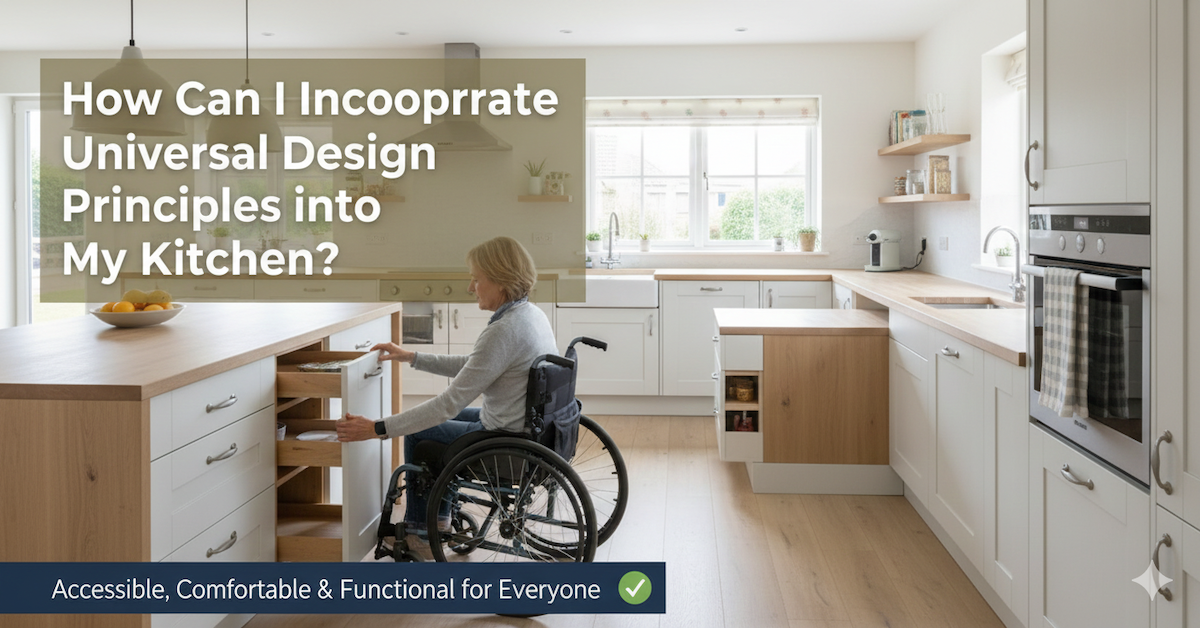
Countertop placement also matters. Multi level counters help people prepare food comfortably whether sitting or standing. Lower sections work well for children or seated users, while standard height counters remain useful for everyday tasks. Designing with flexibility in mind helps the kitchen serve everyone.
Improving Storage for Easier Access
Storage is essential to a functional kitchen, and universal design focuses on making it easy to reach what you need. Pull out drawers are often more accessible than deep cabinets because they slide out fully, making tools and ingredients visible. This reduces bending and reaching.
Open shelving can also be helpful for frequently used items, especially when placed at comfortable heights. Lazy Susans, pull down shelves, and corner solutions help make difficult spaces more usable. These choices improve efficiency and reduce physical strain.
A universal design kitchen should minimize unnecessary effort. When storage feels simple and intuitive, you move through tasks with ease.
Choosing Appliances That Enhance Accessibility
Appliances play a major role in how comfortable and safe a kitchen feels. Universal design encourages choosing appliances that are easy to reach, easy to read, and easy to operate.
Side opening ovens and drawer style dishwashers reduce bending and reaching. Refrigerators with French doors or bottom freezers make food more accessible. Controls with clear labeling and simple buttons support users of all ages. Even the placement of appliances affects accessibility. Keeping microwaves at counter height or within a cabinet tower prevents lifting heavy dishes overhead.
These small adjustments improve everyday comfort without affecting style.
Lighting That Supports Visibility and Safety
Good lighting is essential in any kitchen, but it becomes even more important with universal design. Bright, even lighting helps reduce shadows and improves safety around sharp tools and hot surfaces. Under cabinet lighting illuminates prep areas, while ceiling lighting ensures consistent brightness throughout the room.
Task lighting near sinks, stoves, and counters supports precision and reduces eye strain. Soft ambient lighting helps the space feel warm and inviting. A combination of lighting types allows the kitchen to adapt to different activities and needs.
Universal design often includes thoughtful switch placement as well. Switches at reachable heights help everyone turn lights on and off comfortably.
Selecting Flooring That Enhances Safety
Slip resistant flooring is one of the simplest ways to improve kitchen safety. Materials such as textured tile, vinyl, or matte finishes provide grip and reduce the risk of slipping when the floor is wet. Comfort also matters. Flooring with a slight softness underfoot makes long cooking sessions easier.
Universal design encourages choosing materials that look good but remain practical. A safe kitchen floor supports movement, reduces fatigue, and lowers injury risk. This is especially important in busy homes with children or seniors.
Adding Safety Features That Make Daily Tasks Easier
Universal design emphasizes built in safety. Rounded countertop edges reduce injury risks. Lever style faucets are easier to operate than standard knobs. Soft close drawers and cabinets prevent sudden slams. Smart features, such as automatic shut off appliances or motion sensor lighting, add convenience and protection.
These upgrades help everyone feel more confident in the kitchen. Families with young children appreciate reduced hazards, and older adults benefit from easier handling and reduced strain.
Combining Functionality With Style
A common misconception is that universal design limits creativity. In reality, these principles blend beautifully with modern, traditional, or minimalist design styles. Many features, such as pull out drawers or task lighting, enhance both function and aesthetics. Multi level counters add visual interest. Open floor plans support natural light and modern appeal.
Universal design simply encourages thoughtful choices that improve day to day life without compromising beauty.
Conclusion
Incorporating universal design principles into your kitchen helps create a space that is enjoyable, safe, and easy to use for everyone in your home. Thoughtful layout planning, accessible storage, comfortable appliance placement, good lighting, safe flooring, and built in safety features all play a role. These elements work together to create a kitchen that adapts to your needs, supports long term comfort, and remains functional as your lifestyle changes.
If you want to build a kitchen that feels welcoming and effortless for every member of your household, Kitchen Discounters can help you design a space that blends accessibility with style. Their team specializes in creating kitchens that look beautiful and function smoothly, making it easier to bring your vision to life with confidence.