
How Can I Plan a Kid Friendly Kitchen Design?
A kitchen is one of the busiest places in a home. Families cook, eat, play, and spend time together there, which makes safety and convenience especially important when young children are involved. A kid friendly kitchen should support daily routines while keeping the space organized, comfortable, and safe for everyone. Designing with kids in mind does not mean sacrificing style. It simply means choosing materials, layouts, and features that fit the needs of a modern family.
Thoughtful planning helps create a kitchen where children can participate in meal prep, handle snacks independently, and move around safely. When a kitchen is designed well, it becomes a space that encourages connection and makes daily life easier for both parents and kids.
Quick Answer: You can plan a kid friendly kitchen by choosing durable materials, adding safe storage, lowering certain access points for snacks, keeping hazardous items out of reach, using rounded edges, improving visibility, and creating zones for kids to participate safely. A kid friendly design balances safety with practicality, ensuring the kitchen works well for both adults and children throughout the day.
Choose Durable and Easy to Clean Materials
Families use their kitchens heavily, and kids are often less careful with spills, splatters, and fingerprints. Choosing materials that are easy to clean and resistant to scratching or staining helps the kitchen stay attractive and functional.
Countertops such as quartz or solid surface materials work well because they resist stains and require minimal upkeep. Matte cabinet finishes help hide fingerprints better than glossy ones. Floors made from vinyl plank, laminate, or tile offer durability and are easy to wipe clean after spills. When your surfaces are designed to handle family life, maintenance becomes much easier.
Keep Hazardous Items Out of Reach
Safety is one of the most important parts of a kid friendly kitchen. Storing hazardous items high up or behind secured cabinets prevents accidents. Cleaning products, sharp tools, and medicine should be kept in locked or inaccessible areas.
Adding childproof latches or choosing cabinets with built in locking features helps prevent young children from opening dangerous spaces. Ovens and cooktops should be placed thoughtfully so that handles, controls, and hot surfaces are harder for kids to reach. Planning with safety in mind protects your family while still giving you a stylish and functional kitchen.
Create Accessible Zones for Independence
While some items should be kept out of reach, other items can be placed lower so children can help themselves safely. Snacks, plastic cups, and kid friendly dishes can be stored in lower drawers or cabinets. This gives children independence and reduces the number of times parents need to help with small tasks.
A low drawer for lunchbox supplies or utensils makes mornings smoother. You can also add a step stool stored in a slide out compartment to support kids who want to help with cooking or baking. Designing these zones teaches children responsibility while helping keep the kitchen organized.
Choose Rounded Edges for Safety
Sharp corners on countertops or islands can pose a risk for young children. When planning your design, choosing rounded or beveled edges reduces the chance of injury. This small detail greatly improves safety without changing the overall look of your kitchen. Kid friendly design focuses on minimizing hazards while maintaining the style you want.
Add Good Lighting for Better Visibility
Proper lighting helps prevent accidents and improve safety. Under cabinet lighting improves visibility on work surfaces, helping you see spills, tools, and ingredients more clearly. Bright overhead lighting helps both adults and children move around safely.
Well lit spaces feel more open, welcoming, and comfortable for kids. Lighting can also highlight design features you want to showcase.
Use Soft Close Features to Prevent Pinched Fingers
Many modern kitchens include soft close cabinetry and drawers. These reduce slamming noises and help protect small hands from getting pinched. Soft close drawers move smoothly, making the kitchen feel more peaceful and child friendly.
The combination of safety and convenience makes soft close hardware a smart choice for busy households.
Make Space for Family Interaction
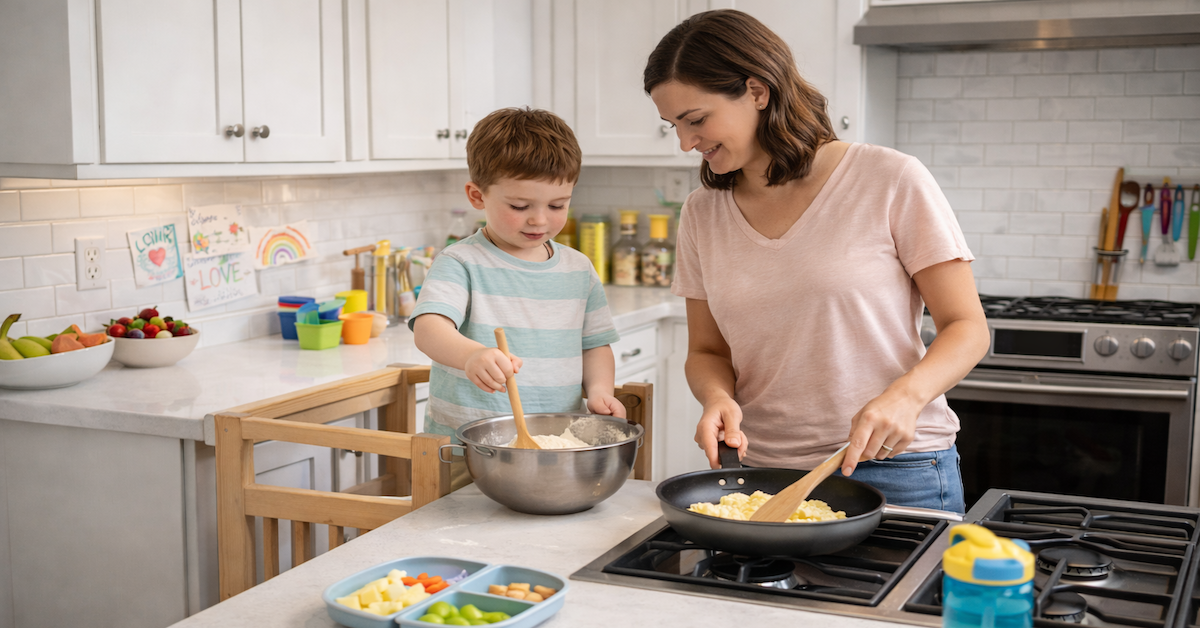
A kid friendly kitchen encourages togetherness. Adding a seating area, small dining nook, or island overhang allows children to sit and participate while adults cook. This space can be used for homework, snacks, or creative activities.
A layout that keeps the cooking zone separate from busy walkways is ideal. It reduces the risk of kids accidentally crossing into hot or hazardous areas. Open sightlines help you keep an eye on children while handling kitchen tasks. Designs that support interaction make the kitchen a warm and engaging part of daily life.
Consider Easy to Reach Appliances
Some families benefit from kid friendly appliance placement. For example, a lower microwave drawer allows children to heat snacks safely without climbing onto counters. Refrigerator drawers give kids easy access to water bottles, fruits, or yogurt.
Appliances do not need to be specifically labeled as kid friendly. They simply need to be installed at heights that match your family’s needs. These adjustments make daily routines smoother and help kids develop independence.
Plan for Long Term Use
A kid friendly kitchen should grow with your family. Even if your children are very young now, they will soon become more independent. Choosing timeless materials, adaptable storage, and flexible layouts ensures your kitchen stays functional for many years.
You can design spaces that shift from child use to general family use as your needs evolve. Thinking long term makes your investment smarter and more sustainable.
Conclusion
A kid friendly kitchen balances safety, durability, and convenience with the warmth and style your family loves. By choosing strong materials, planning safe storage, creating functional zones for children, and adding features that support independence, you build a kitchen that works for everyone. A thoughtful design helps your household move through mornings, meals, and busy evenings with ease.
Kitchen Discounters can help you plan a kid friendly kitchen that fits your family’s lifestyle. Their team offers guidance on materials, layouts, storage, and design choices that support both safety and everyday efficiency.