
What Bathroom Upgrades Add the Most Value to a Home?
A bathroom influences how a home feels every morning and how buyers judge its overall condition. Worn finishes, poor lighting, weak ventilation, limited storage, and an awkward bathing area can make the entire home seem less cared for. The most valuable improvements solve those practical problems while giving the room a clean, consistent look.
Value does not always come from the largest budget. Buyers often respond better to a well-planned midrange renovation than to highly personal luxury features. The right scope depends on the bathroom's condition, the home's price range, local expectations, and how long the owner plans to stay.
Quick Answer: The bathroom upgrades that usually add the most value are a dependable shower or tub area, a functional vanity with storage, good lighting and ventilation, durable flooring, modern fixtures, and repairs to visible water damage. A coordinated midrange remodel often gives a stronger return than an oversized luxury project because it improves both daily use and broad buyer appeal.
Which Bathroom Improvements Usually Create the Most Value?
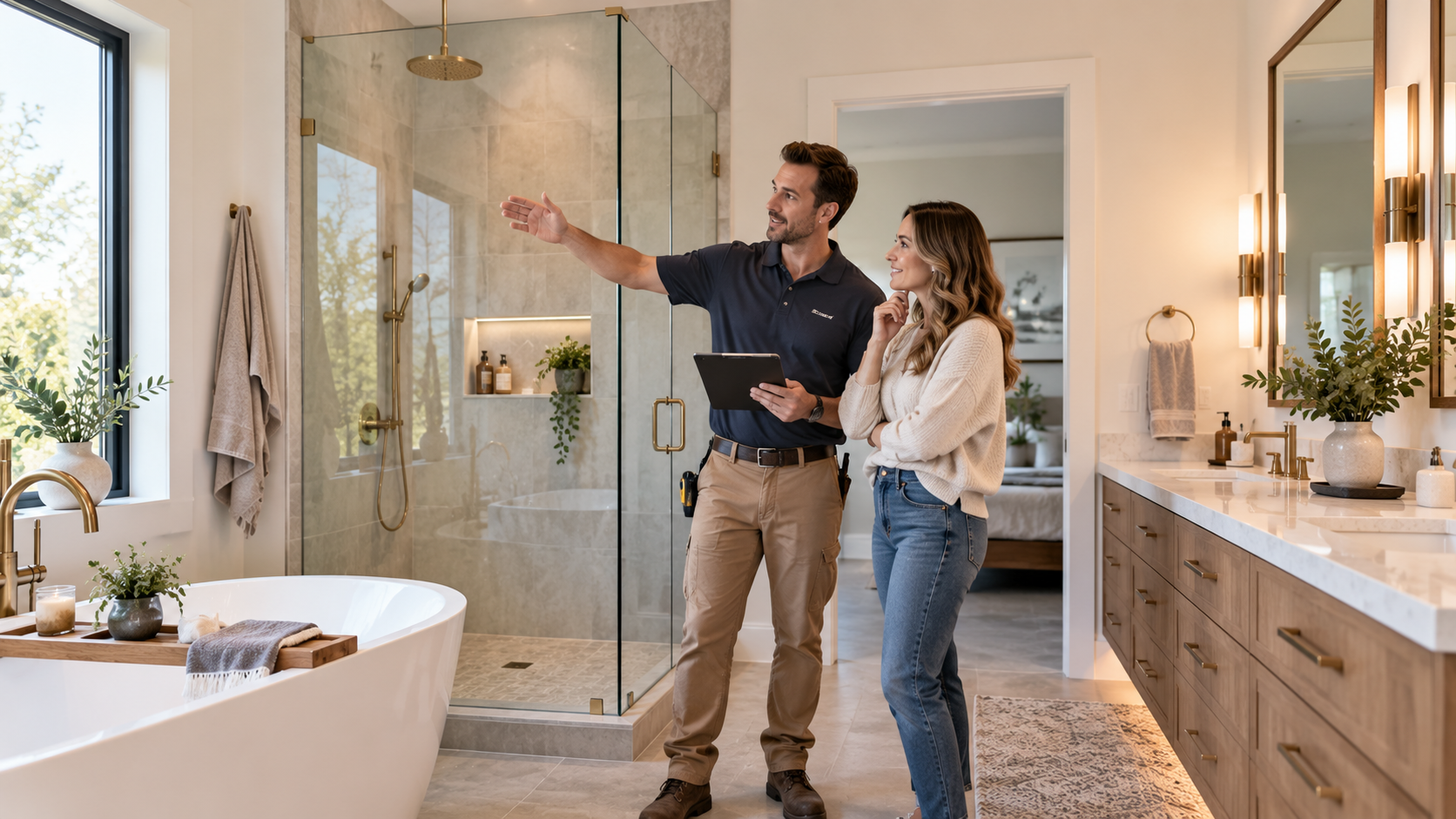
The highest-value projects fix condition and function before adding decorative extras. A bathroom that stays dry, stores daily items, provides good light, and feels easy to clean gives homeowners immediate benefits and presents well when the property is sold.
Kitchen Discounters provides complete bathroom remodeling that can include fixtures, flooring, cabinets, countertops, and sinks. Coordinating those pieces prevents the room from looking like several unrelated updates completed at different times.
The best priorities are usually the bathing area, vanity, lighting, ventilation, flooring, and finishes. Their order depends on what is failing now. Active leaks, soft flooring, damaged tile, and poor ventilation deserve attention before paint colors, mirrors, or decorative hardware.
Does a New Shower or Tub Add More Value?
Walk-In Showers
A well-built walk-in shower can improve access, make a small bathroom feel more open, and replace a worn tub surround. Features such as a low threshold, stable grab-bar backing, a useful niche, and a handheld showerhead can support many ages without making the room feel institutional.
Keeping a Bathtub
A bathtub still matters in many family homes, especially when the property has only one full bathroom. Removing the only tub may narrow buyer appeal. If the home has more than one bathing space, converting one tub to a shower is usually easier to justify.
The right answer depends on the household and the home's likely buyer. A cramped shower, damaged surround, or difficult tub entry may justify a larger change. The guide to small bathroom layouts can help frame the tradeoff between access, storage, clearances, and the visual size of the room.
Why Does a Better Vanity Add Value?
The vanity is both storage furniture and a work surface. A replacement can solve swollen cabinetry, limited drawers, poor counter space, dated sinks, and clutter around the mirror. Buyers notice whether doors align, drawers move smoothly, and everyday items have a logical place.
New bathroom cabinetry options can make better use of the available width through drawers, organizers, and a layout matched to plumbing. In a shared bathroom, two sinks may help when the room is wide enough, but one larger sink can preserve more usable counter space in a smaller room.
Choose a durable vanity top and avoid crowding the room. Quartz and properly selected solid surfaces are popular because they are easy to clean and available in many colors. Kitchen Discounters' countertop selection includes quartz, granite, and solid-surface choices that can coordinate with cabinets and flooring.
Do Lighting and Ventilation Improve Resale Appeal?
Yes. Layered lighting makes grooming easier and helps the bathroom appear cleaner and larger. A ceiling fixture alone often creates shadows at the mirror. Light from both sides of the face, or an even fixture above the mirror, gives better practical illumination.
Ventilation protects more than comfort. A properly sized and vented exhaust fan helps move moisture outside, which can reduce condensation on mirrors and finishes. A quiet fan with a timer or humidity control is more likely to be used consistently.
Electrical and ventilation changes may require permits or professional work depending on the municipality and scope. Plan them before new tile or cabinetry is installed so wiring, switches, ducts, and wall repairs do not disturb finished surfaces later.
What Bathroom Flooring Adds Practical Value?
Bathroom flooring should resist moisture, provide dependable footing, and clean easily. Porcelain tile remains a strong choice because it is durable and available in many formats. Luxury vinyl can offer a warmer feel and simpler installation in suitable rooms.
Large tiles can reduce grout lines, but the layout must support safe drainage where the floor slopes toward a shower drain. Highly polished surfaces may be slippery when wet. A matte texture and grout that does not show every mark can improve daily use.
Kitchen Discounters also provides flooring design and installation, allowing the bathroom floor to be considered with adjacent hallways, vanity height, door clearance, and the overall remodel sequence.
Which Smaller Bathroom Updates Offer Good Value?
Smaller upgrades can create a clear improvement when the layout and waterproof areas are already sound. Replacing a worn faucet, mirror, light fixture, toilet, hardware, towel bars, or paint can make the room feel maintained without requiring demolition.
A useful small-update list includes:
- A quiet exhaust fan that vents outdoors
- Even lighting around the mirror
- A water-efficient toilet and reliable faucets
- Coordinated hardware and fixture finishes
- Fresh paint made for humid rooms
- Organizers that improve vanity storage
These changes add the most value when they address visible wear or a daily inconvenience. Replacing a working fixture only to follow a short-lived trend is less useful than fixing poor lighting, loose hardware, damaged grout, or a vanity that cannot store basic items.
How Much Should You Spend on a Bathroom Upgrade?
Set the budget around the home's value, the bathroom's condition, and the length of time you expect to stay. A high-end primary suite can make sense in a higher-value home, while a practical hall bathroom often benefits more from durable midrange choices.
The site's overview of Illinois bathroom remodel costs separates cosmetic updates from midrange and full renovations. Those figures are planning ranges, and the actual cost depends on room size, material choices, plumbing changes, electrical work, permits, and problems discovered after demolition.
Keep a contingency for hidden water damage, outdated plumbing, or weak subflooring. These repairs may not create the most visible before-and-after photos, but they protect the work above them and reduce the chance that a buyer's inspection reveals unresolved problems.
What Bathroom Upgrades Can Hurt Value?
Overly personal finishes can make a bathroom harder for future buyers to imagine as their own. Strong patterns, unusual fixture colors, and highly specialized features are not automatically bad, but they carry more risk when resale is expected soon.
Poor workmanship also cancels out the value of good materials. Uneven tile, weak waterproofing, inadequate ventilation, misaligned doors, and incomplete trim signal future repair costs. Buyers may prefer a modest bathroom completed well over an expensive room with visible problems.
Removing useful features without a clear reason can also reduce appeal. Examples include taking away the home's only tub, sacrificing most storage for an oversized shower, or crowding a small room with a double vanity. Finished bathroom projects can help homeowners judge proportion before choosing a layout.
How Should You Prioritize Upgrades Before Selling?
Start with leaks, damaged surfaces, ventilation, lighting, and anything that appears unfinished. Then address the most obvious dated elements, such as a worn vanity, stained countertop, failing floor, or mismatched fixtures. Keep colors and materials broadly appealing if the sale is close.
If the bathroom is functional and structurally sound, a targeted refresh may be enough. If water damage, poor clearances, failing plumbing, or a badly designed bathing area affects daily use, a more complete remodel can present better value and reduce buyer objections.
A bathroom design consultation can help separate essential repairs from optional features and create a scope that matches the property. It also allows materials, installation, and budget to be considered together before purchases begin.
Frequently Asked Questions
Does a walk-in shower add more value than a tub?
A walk-in shower often appeals to adults who value access and easy cleaning, but many families still want at least one bathtub in the home. The strongest choice depends on the number of bathrooms and likely buyer needs.
Is a double vanity worth adding?
It can be valuable in a shared primary or family bathroom when there is enough width and clear floor space. In a small room, one sink with more counter space and storage may function better.
Do heated bathroom floors add value?
Heated floors can improve comfort and make a primary bathroom feel more finished, especially in a cold climate. They are usually a lifestyle upgrade rather than the first priority for resale value.
What bathroom colors are best for resale?
Warm whites, soft neutrals, and natural material tones usually appeal to a broad audience. Color can still be added through paint, towels, and accessories that are easy to change.
Should I remodel a bathroom before selling?
Remodel when poor condition or function is likely to concern buyers, but avoid spending far beyond neighborhood expectations. If the room is sound, targeted repairs and a coordinated cosmetic update may be enough.
Conclusion
The bathroom upgrades that add the most value improve the shower or tub, vanity storage, lighting, ventilation, flooring, and visible condition of the room. A coordinated, durable midrange design often serves more buyers than a costly renovation built around personal luxury features.
Kitchen Discounters can help homeowners plan bathroom cabinets, counters, floors, fixtures, and installation as one project. A showroom visit or consultation is a comfortable first step when you are ready to compare options.