
What Is the Best Flooring for a Kitchen That Handles Heavy Traffic?
Kitchen flooring takes more punishment than most surfaces in a home. It deals with constant footsteps, spills, dropped utensils, moving chairs, pet claws, and the grit carried in from nearby doors. In a busy household, a floor that looks good on installation day also needs to stay practical after years of cooking, cleaning, and family activity.
The best choice depends on more than hardness. Water resistance, comfort, slip resistance, repairability, subfloor condition, and the way the kitchen connects to nearby rooms all matter. A material that performs well in one home may feel noisy, cold, or visually disconnected in another.
Quick Answer: Porcelain tile is usually the most durable flooring for a kitchen with very heavy traffic because it resists water, scratches, stains, and everyday wear. High-quality luxury vinyl plank is often the best all-around option for busy families because it adds water resistance, easier maintenance, and more comfort underfoot. Engineered hardwood can work well when visual continuity is the priority, but it needs more care around moisture and scratches.
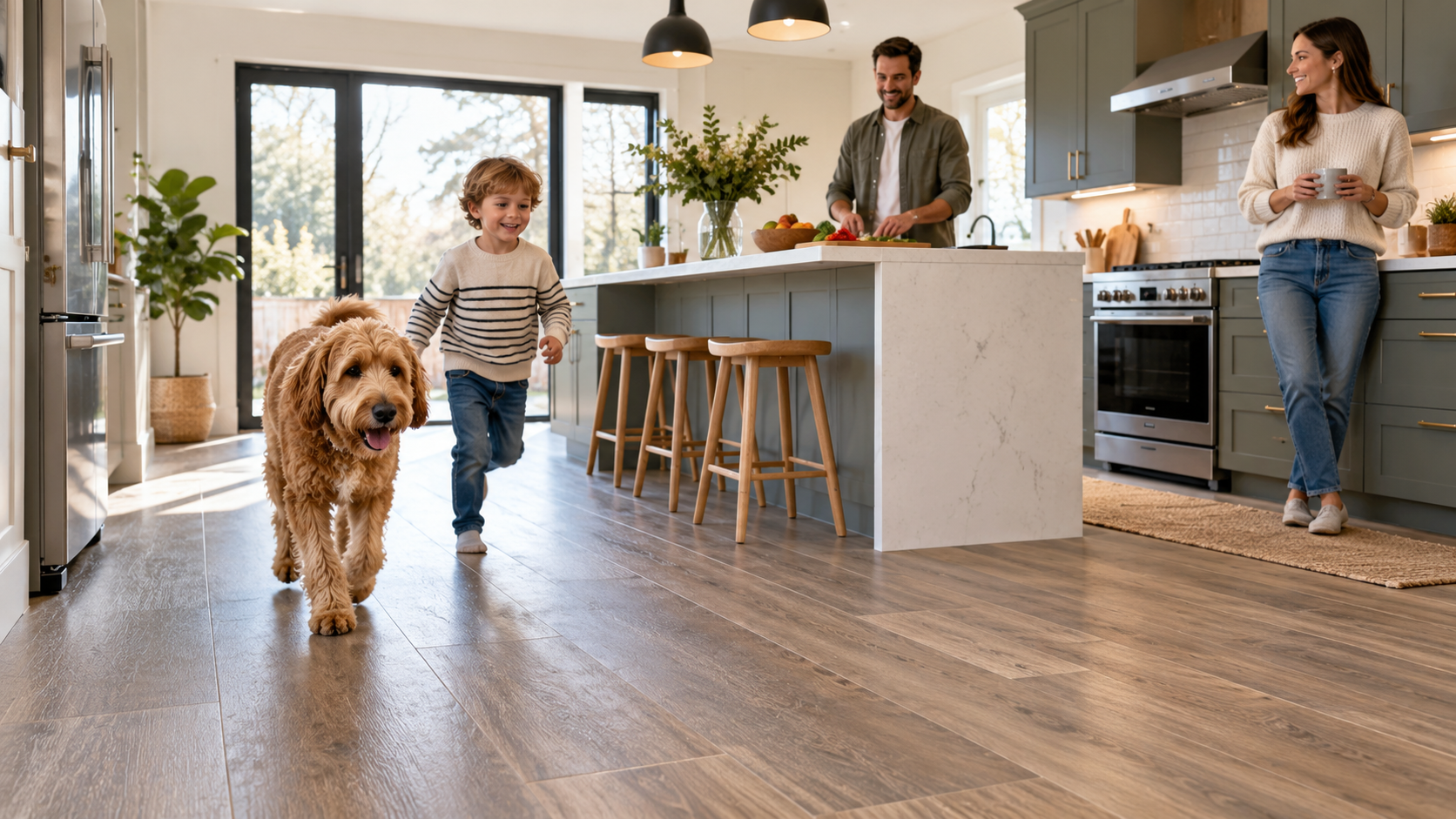
What Does Heavy Traffic Kitchen Flooring Need to Handle?
A high-traffic kitchen floor must handle repeated wear without becoming difficult to clean or unsafe when wet. Surface strength matters, but so do stable installation, sealed edges, dependable transitions, and a finish that does not hide damage until it becomes expensive.
The right performance standard depends on the household. Children, pets, frequent entertaining, outdoor access, and daily cooking all increase wear in different ways. Kitchen Discounters offers kitchen flooring services alongside broader remodeling work, which helps flooring choices account for cabinetry, counters, appliances, and the finished floor height.
Because its kitchen and home services cover several connected parts of a project, flooring can be selected with the surrounding materials and installation sequence in mind. That coordination is useful when new cabinets, counters, or appliances will change clearances.
Before comparing materials, identify the problems the floor must solve. A home with muddy pet traffic may prioritize easy cleaning. A household that cooks for hours may value softer footing. A kitchen open to a wood-floored living room may need a material that creates a smooth visual transition.
Which Flooring Material Performs Best in a Busy Kitchen?
Porcelain Tile
Porcelain tile offers the strongest combination of water resistance, surface durability, and long-term wear. It is denser than standard ceramic tile and can handle busy entry paths, stools, rolling carts, and frequent mopping. A matte or textured finish is usually more practical than a highly polished surface where spills are common.
Its main tradeoffs are hardness and temperature. Dishes are more likely to break when dropped, and standing for long periods can feel tiring. Proper underlayment, grout selection, and installation are important because movement in the subfloor can crack tile or grout even when the tile itself is strong.
Luxury Vinyl Plank
Quality luxury vinyl plank, often called LVP, is a practical choice for busy families. It resists everyday moisture, feels warmer and quieter than tile, and is easier on feet. Many products also imitate wood convincingly enough to connect a kitchen with nearby living spaces.
Product quality varies, so compare the wear layer, core construction, warranty, and installation requirements rather than choosing by pattern alone. The site's comparison of hardwood and luxury vinyl is useful when the decision comes down to authentic wood character versus simpler daily care.
Engineered Hardwood
Engineered hardwood brings real wood to the surface while using a layered core for greater stability than many solid wood products. It can be an attractive solution when the kitchen is part of an open floor plan and homeowners want one continuous material through several rooms.
It is less forgiving of standing water than porcelain or waterproof vinyl. Spills should be wiped quickly, protective pads belong under furniture, and the finish must suit the expected traffic. Some products can be refinished lightly, while others cannot, so ask about the thickness of the wood wear layer.
Is Porcelain Tile Better Than Luxury Vinyl?
Porcelain tile is better when maximum resistance to water, scratches, heat, and heavy wear comes first. Luxury vinyl is better when the household wants a warmer, quieter, more forgiving surface with simple cleaning and a lower installation burden in many situations.
Neither material wins every category. Tile can last for decades when the subfloor and installation are sound, but damaged pieces and stained grout can be difficult to address. Vinyl is comfortable and practical, but sharp impacts, dragging appliances, or low-quality construction can damage it.
The site's guide to high traffic flooring options also covers ceramic tile, natural stone, and engineered hardwood. Use those materials as part of a full comparison instead of assuming that the most durable surface automatically fits the room, budget, and household.
How Important Is Water Resistance in a Kitchen Floor?
Water resistance is essential near sinks, dishwashers, refrigerators, and exterior doors. A small spill is easy to wipe up, but a slow appliance leak can reach seams, edges, underlayment, and the subfloor before the surface looks damaged.
Waterproof flooring protects the material itself, but it does not make the entire room waterproof. Installation details around cabinets, walls, vents, and transitions still matter. If water reaches the subfloor, even a waterproof plank may need to be removed so the structure can dry.
This is one reason flooring decisions should be coordinated with full kitchen remodeling. Appliance locations, cabinet installation, plumbing changes, floor height, and transitions affect the finished result and may determine whether flooring goes under or around fixed elements.
What Flooring Is Most Comfortable and Safe?
Luxury vinyl and cork-backed products generally feel softer and quieter than tile or stone. Engineered wood also feels warmer than tile. If comfort is the main concern, anti-fatigue mats can help at the sink and primary preparation area without changing the entire flooring choice.
For safety, look at the surface texture and how it behaves when wet. Highly polished tile or stone can become slippery. Deep textures may improve grip but collect dirt. Samples should be viewed and touched in person because photographs do not show surface feel accurately.
Homes with young children, older adults, or pets may benefit from a low-glare matte finish, smooth transitions, and fewer height changes between rooms. The goal is a surface that provides grip without being rough enough to make routine cleaning frustrating.
How Should Flooring Coordinate With the Kitchen Design?
Flooring covers a large visual area, so its color and pattern can calm the room or make it feel busy. Cabinets and countertops usually attract more attention at eye level. A restrained floor often gives those features room to stand out, while a strong floor pattern works best when surrounding finishes are simpler.
Bring cabinet, countertop, backsplash, and flooring samples together under the kitchen's actual lighting. The same gray, cream, or wood tone can shift throughout the day. Reviewing completed kitchen projects can also show how different materials read at full scale rather than as isolated samples.
Consider continuity beyond the kitchen doorway. Matching nearby hardwood may make an open plan feel larger, while a deliberate change to tile can define the cooking zone. If materials change, the transition should happen at a logical architectural line and avoid a raised strip that becomes a trip point.
What Installation Details Affect Flooring Durability?
The subfloor must be clean, dry, flat, and strong enough for the selected material. Tile needs a base that limits movement. Floating vinyl needs the flatness specified by the manufacturer. Engineered wood must be installed with the correct moisture and expansion allowances.
Cabinet and appliance plans also affect sequencing. Some floors can run under cabinets, while others should remain free to expand. Dishwasher clearance can become a problem when new flooring raises the finished height after cabinets and counters are already installed.
Professional measurement should include door swings, toe kicks, vents, transitions, and appliance removal. The broader guide to durable kitchen flooring can help homeowners compare style and maintenance, but correct installation is what allows the chosen product to perform as intended.
How Do You Balance Flooring Cost and Long-Term Value?
Compare the full installed cost, not the price per square foot on a shelf label. Removal, subfloor repair, underlayment, transitions, trim, grout, adhesives, and labor can change the total. A less expensive product may cost more if it requires extensive preparation or earlier replacement.
Think about how long you expect to keep the floor and how easily it can be repaired. Extra matching tile or planks should be stored after installation because colors and patterns may be discontinued. Replacing one damaged piece is much easier when the exact product is available.
Kitchen Discounters has served the Lake Zurich area since 1983 and coordinates products with design and installation. A project planning conversation can clarify material choices, preparation needs, and how the floor fits the larger kitchen scope before a final selection is made.
Frequently Asked Questions
What kitchen flooring is easiest to clean?
Luxury vinyl and porcelain tile are among the easiest kitchen floors to clean because their surfaces resist routine spills. Grout, seams, and manufacturer care instructions still affect maintenance, so compare the complete installation rather than the surface alone.
Is laminate flooring suitable for a busy kitchen?
Water-resistant laminate can work in some kitchens, but it is generally less forgiving of standing water than porcelain tile or products designed as waterproof vinyl. Check the warranty carefully and protect seams near sinks and appliances.
Can hardwood flooring handle kitchen traffic?
Yes, especially when a durable finish is used and spills are cleaned quickly. Engineered hardwood often provides better dimensional stability, but pet claws, grit, water, and chair movement can still mark the surface.
What floor color hides dirt best?
Mid-tone floors with gentle variation usually hide crumbs, dust, and small marks better than very dark or very light solid colors. Heavy patterns can hide dirt but may also make the kitchen feel visually busy.
Should kitchen flooring go under cabinets?
It depends on the flooring system and the cabinet plan. Tile and some glued floors often run underneath, while floating floors usually need space to move and should follow the manufacturer's installation instructions.
Conclusion
Porcelain tile is the strongest choice for maximum durability in a high-traffic kitchen, while quality luxury vinyl often gives busy families the best balance of water resistance, comfort, maintenance, and cost. Engineered hardwood remains a good option when continuous real-wood character matters and the household can manage moisture carefully.
Kitchen Discounters can help compare materials, installation needs, and the way flooring fits with the rest of the kitchen. Homeowners can visit the showroom or start with a relaxed conversation about the room and daily routine.