
What Is the Difference Between Quartz and Quartzite Countertops?
The naming similarity between quartz and quartzite is responsible for more countertop purchasing confusion than almost any other terminology in kitchen design. They sound like variations of the same material, and showroom samples of each can look strikingly similar, particularly in the white and grey marble-look styles that have dominated design trends for years. But they are fundamentally different products with different origins, different properties, and different maintenance requirements. Confusing the two is one of the more consequential mistakes a homeowner can make when investing in countertops.
The practical consequences of this confusion show up years after installation. A homeowner who chose quartzite believing it was the same low-maintenance engineered product as quartz discovers it needs sealing. One who chose quartz expecting natural stone variation finds consistency instead of the unique movement they were hoping for. Getting the distinction right before purchasing ensures the material you live with matches what you expected.
Quick Answer: Quartz countertops are an engineered product made from crushed quartz stone bound with polymer resin, producing a non-porous, consistent surface that requires no sealing. Quartzite is a natural metamorphic stone formed when sandstone is subjected to extreme heat and pressure deep in the earth, producing a hard, crystalline material that looks similar to marble but is harder. Quartzite requires sealing and is porous; quartz does not. They share a name but have almost nothing else in common.
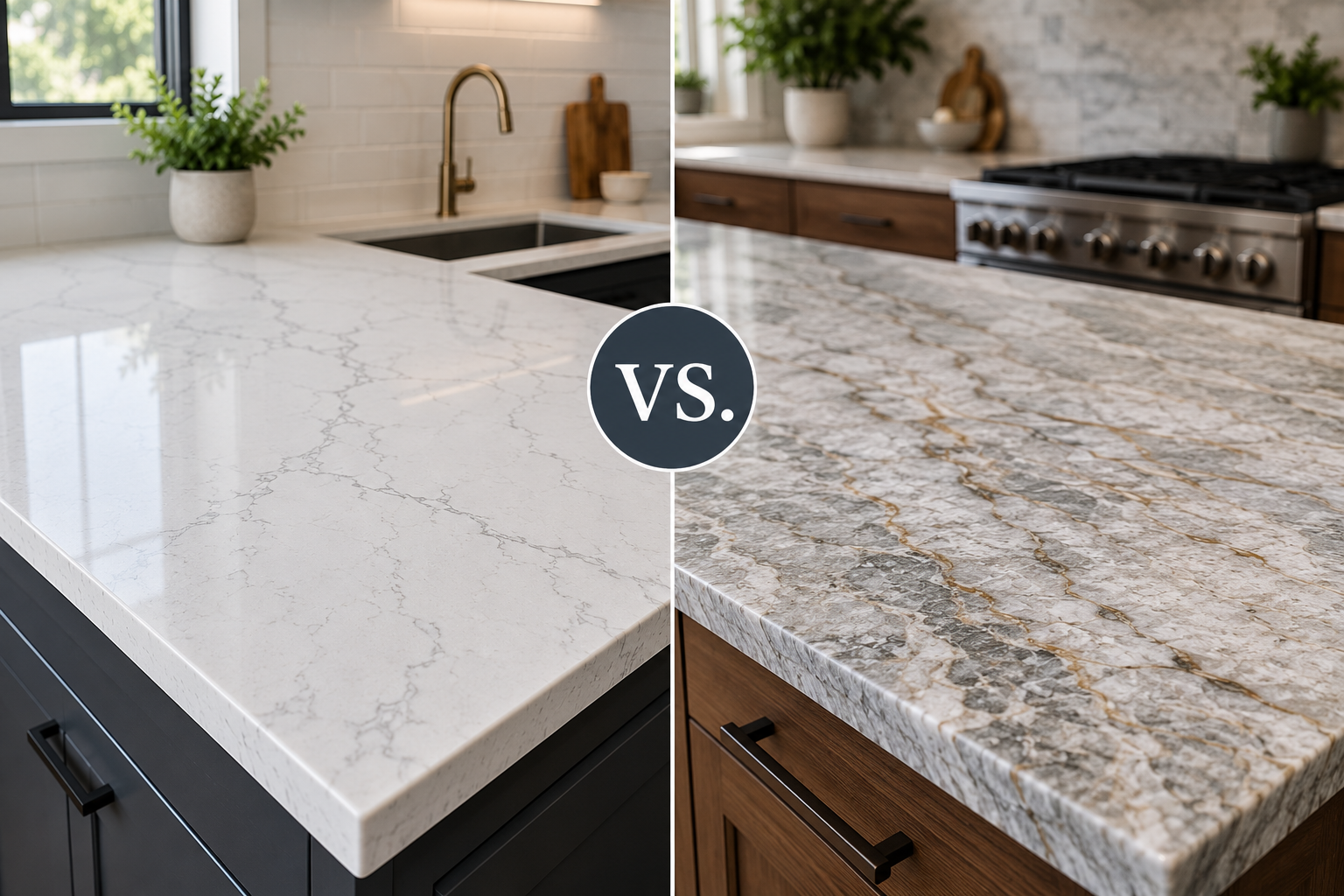
What Quartz Actually Is
Quartz countertops are manufactured, not mined. The production process combines approximately 90 to 95 percent crushed natural quartz stone with polymer resins, pigments, and sometimes recycled glass or mirror fragments. The resulting material is pressed into slabs under heat, producing a surface that is harder than many natural stones, completely non-porous, and consistent in colour and pattern from edge to edge across the slab.
Because quartz is engineered, it can be produced in a virtually unlimited range of colours and patterns, including designs that mimic marble, concrete, and other stones with more consistency than the natural versions offer. The colour you see in the showroom is what arrives on site, which makes it significantly more predictable to specify than natural stone where every slab is unique.
The non-porous nature of quartz is its most practically significant characteristic. It does not absorb liquids, does not stain from wine or oil, and does not require sealing at installation or at any point during its life. Cleaning with soap and water is sufficient for routine maintenance.
What Quartzite Actually Is
Quartzite is a natural stone formed over millions of years when quartz-rich sandstone is subjected to the intense heat and pressure of tectonic activity. The process recrystallises the sand grains into a dense, interlocking crystalline structure that is harder than granite and significantly harder than marble. Quartzite is mined, cut into slabs, and polished in the same way as granite and marble.
The visual character of quartzite is its defining appeal. It has the dramatic veining and movement of marble, the variation and uniqueness of any natural stone, and often a luminous, slightly translucent quality that engineered stone cannot replicate. Each slab is genuinely one of a kind. For homeowners who want the look of marble with better durability, quartzite is the natural stone alternative most frequently recommended.
However, quartzite is porous to varying degrees depending on the specific stone and its mineral composition. It absorbs liquids if not properly sealed, and because of its marble-like appearance, acidic substances like lemon juice and wine can etch the surface of lower-quality quartzite specimens that contain calcite along with the quartz minerals.
Side-by-Side Comparison: The Key Differences
The clearest way to understand the choice between these materials is to compare them directly across the factors that matter most for a kitchen countertop:
● Origin: Quartz is manufactured; quartzite is a natural metamorphic stone.
● Porosity: Quartz is non-porous and never needs sealing; quartzite is porous and requires sealing on installation and periodically thereafter.
● Maintenance: Quartz needs only soap and water; quartzite needs sealing, careful cleaning, and avoidance of acidic substances on some specimens.
● Heat resistance: Quartz is heat-sensitive (the resin can scorch); quartzite tolerates direct heat significantly better.
● Appearance: Quartz offers consistent colour; quartzite offers unique natural variation with dramatic veining.
● Cost: Both sit in a similar mid-to-premium price range, though rare quartzite varieties can be significantly more expensive.
Why Quartzite Is Often Misrepresented
A significant portion of the material sold as quartzite in showrooms is actually marble, dolomite, or soft stone that has not fully metamorphosed to true quartzite. True quartzite, when scratched with a steel knife blade, will not scratch because it is harder than the steel. Marble, dolomite, and under-metamorphosed specimens will scratch. If you are paying quartzite prices for a marble look, confirming the stone's true composition with a scratch test before purchasing is worth doing.
This misrepresentation is not always intentional: the stone trade uses quartzite loosely to describe stones that look like quartzite but may not have the same hardness and acid resistance. Asking suppliers specifically about the stone's hardness, porosity, and acid resistance, and requesting test results if available, protects against receiving something that will etch and stain in ways a true quartzite would not.
Which Is Better for a Kitchen
For active cooking kitchens where spills are frequent and maintenance time is limited, quartz is the more practical choice. Its non-porous surface, consistent performance, and zero sealing requirement make it genuinely hands-off in a way that natural stone never quite is. The detailed comparison of quartz vs granite covers the same practical considerations that apply when comparing quartz to quartzite.
For homeowners who want the unique beauty of a natural stone, are willing to seal and maintain it properly, and prefer the irreplaceable character of a material that cannot be exactly replicated, quartzite offers something quartz genuinely cannot: a surface that was made by the earth over millions of years and exists in no two forms that are exactly alike.
Both materials are available in the full countertop options at Kitchen Discounters, with design assistance to help homeowners understand the practical implications of each choice before committing.
Homeowners prioritising ease of care above all else will find that the broader category of low-maintenance countertops consistently points to engineered surfaces like quartz as the most forgiving option for everyday kitchen use.
Frequently Asked Questions
Can quartzite be used in a bathroom as well as a kitchen?
Yes. Quartzite suits bathroom vanity tops, shower surrounds, and flooring well. Its higher heat and hardness compared to marble makes it a more durable natural stone choice in a bathroom environment where acidic beauty products can cause etching on marble.
How often does quartzite need to be sealed?
Most quartzite countertops need sealing on installation and then approximately once a year, though the specific porosity of the stone affects this. A simple water test, applying a few drops to the surface and observing whether they absorb or bead, reveals whether the seal is still effective.
Will quartz countertops yellow over time?
Standard quartz with polymer resin binding can develop a slight yellowing with prolonged direct UV exposure, which is why it is not typically recommended for outdoor kitchens or installations with significant direct sunlight. Indoor kitchen installations with normal indirect light are not affected by this in practice.
Is quartzite more expensive than quartz?
Both span a wide price range, but rare quartzite varieties from specific quarries can reach significant premiums. Mid-range quartzite and mid-range quartz are comparably priced per square foot installed. The quartzite cost includes the added maintenance of regular sealing that quartz does not require.
Can I put a hot pan directly on quartzite?
Quartzite handles heat better than quartz because it contains no resin. True quartzite resists direct pan placement without the scorching risk that quartz carries. That said, using trivets is still recommended as a general best practice, as thermal shock from extreme temperature changes can theoretically affect any stone.
The Bottom Line
Quartz and quartzite are different materials that share only their name and a visual similarity in certain colourways. Quartz is engineered, non-porous, and maintenance-free. Quartzite is a natural stone that is harder than marble but requires sealing and careful care. The right choice depends entirely on whether you prioritise ease of maintenance or the irreplaceable character of natural stone.
Kitchen Discounters carries both quartz and quartzite in a range of colours and finishes, with knowledgeable staff who can walk you through the practical differences in person. Stop in or get in touch to explore the options for your project.