
What Should I Know Before Adding a Kitchen Island?
A kitchen island can completely transform the way your kitchen looks and functions. It adds workspace, extra storage, seating, and even room for appliances if designed correctly. For many homeowners, the island becomes the center of daily activity. The right island can make meal prep easier, create a natural gathering spot, and add a sense of balance to the room. With so many possibilities, it is important to understand what goes into planning and designing the perfect island.
Before installing one, there are several factors you should consider. Space planning, traffic flow, height, size, utilities, and functionality all play a major role in determining whether the island will work well in your kitchen. Even a beautiful island can become inconvenient if it is too large, too close to appliances, or not suited to your layout. Taking time to plan ensures your island improves your kitchen instead of crowding it.
Quick answer: Before adding a kitchen island, you should make sure you have enough space, determine how the island will be used, plan for proper traffic flow, consider electrical or plumbing needs, and choose a size and design that fit your kitchen layout. A well planned island becomes both a functional and stylish centerpiece.
Knowing Whether You Have Enough Space for an Island
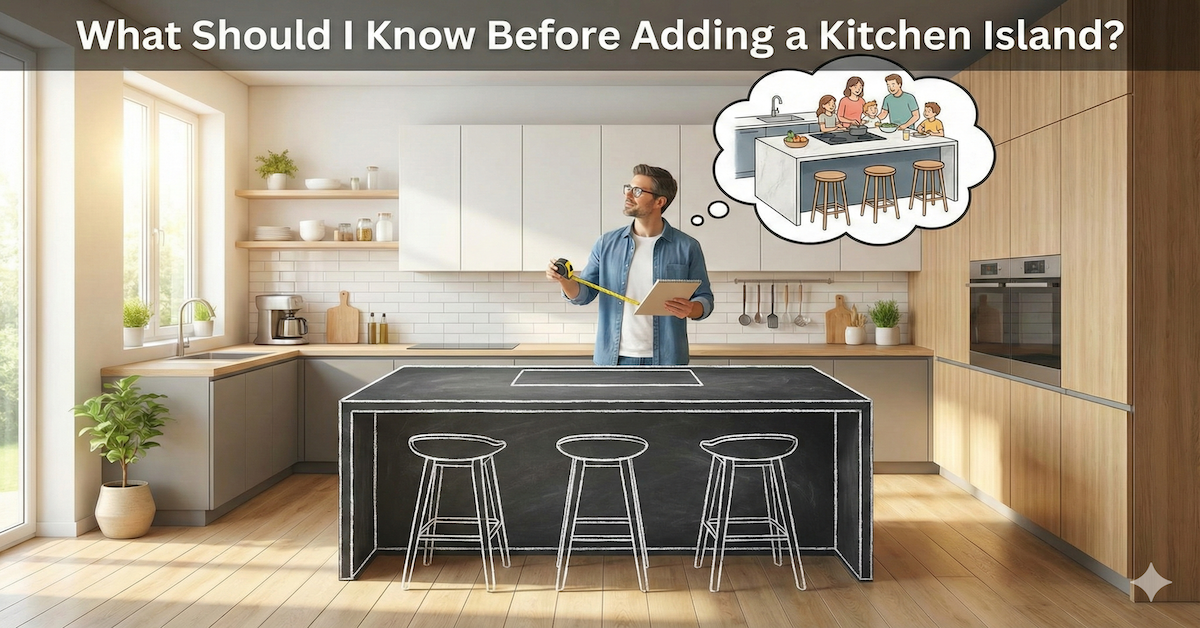
The first and most important factor is space. A kitchen island requires enough clearance around all sides to move comfortably, open appliances, and allow multiple people to pass through the room. Most designers recommend at least three feet of space on all sides of an island, though wider walkways feel more comfortable in a busy kitchen.
Measuring your kitchen helps you determine whether your space can support a full size island or a smaller, modified version. In some homes, a narrow island or a mobile island may offer the benefits without overwhelming the layout. If your kitchen connects to an open concept living area, the island can help define the space while still allowing good flow between rooms.
Walking through the space as if the island already exists is a helpful way to visualize how it will affect movement around the kitchen. If you find yourself squeezing between areas, the island may need to be resized or repositioned.
Choosing the Main Purpose of Your Kitchen Island
A kitchen island can serve many functions. Some homeowners want it primarily for food preparation, while others want additional seating, storage, or a place for appliances. Knowing the main purpose helps guide the design details.
If you plan to use your island as a prep station, consider adding deep drawers, knife storage, or a built in cutting surface. If the island will serve as a breakfast area or gathering spot, seating and legroom become more important. For those who want appliances in the island, such as a sink or cooktop, utilities will need to be planned.
Identifying your goals early ensures your island feels intentional rather than decorative. It also helps you choose materials, finishes, and features that support everyday use.
Planning for Plumbing or Electrical Needs
If your island will include a sink, dishwasher, or cooktop, you will need to plan for plumbing or gas lines. This can require modifications to the floor, so it is helpful to understand these costs ahead of time. Even if you do not plan for major appliances, most islands benefit from electrical outlets. These outlets provide a convenient place for small appliances, phone chargers, or cooking tools.
Outlets must be installed safely and positioned according to code. Planning these details early helps the installation go smoothly and prevents expensive changes later.
Selecting the Right Size and Shape for Your Island
The size and shape of your island depend on the layout of your kitchen. Long, narrow islands work well in galley kitchens, while a square or rectangular island may suit larger spaces. The island should feel balanced with the room and not overwhelm it.
Height also matters. Standard islands are counter height, but some homeowners choose a two level island with seating on one side. This design adds flexibility and makes the island more comfortable for dining or working.
Materials play a role as well. A durable surface like quartz works well for families who cook often, while butcher block adds warmth and a more traditional feel. Choosing a finish that matches or complements your cabinets ensures the island blends naturally into the space.
Understanding How an Island Affects Traffic Flow
Traffic flow is one of the most important considerations when adding an island. Your kitchen should feel easy to move through, especially when multiple people are cooking or walking through the room. If the island interrupts major pathways, it can make your kitchen feel crowded and difficult to use.
Watch how people normally move around your kitchen. Doors, appliances, and walkways all influence where an island should sit. Ideally, each appliance should open fully without hitting the island, and there should be enough space to stand comfortably while cooking.
Avoiding Common Mistakes When Adding an Island
One common mistake is installing an island that is too large for the room. Even though a bigger island offers more workspace, it can make the kitchen feel tight and restrict movement. Another mistake is choosing an island design that does not match the overall style of the kitchen. If the materials or finishes clash, the island may look out of place.
Some homeowners also forget to consider lighting. Islands often benefit from pendant lighting that creates warmth and focuses attention on the area. Without proper lighting, even a beautiful island may feel dim or unfinished.
Finally, overlooking storage needs can reduce the island’s usefulness. Adding drawers, shelves, or cabinets helps maximize the functionality of the space.
Conclusion
Adding a kitchen island is a great way to improve storage, seating, and workspace, but it requires careful planning to ensure it fits your kitchen and lifestyle. By measuring your space, identifying your island’s purpose, planning for utilities, and choosing a size that supports good traffic flow, you create a centerpiece that enhances both beauty and function.
If you want help designing the perfect kitchen island, Kitchen Discounters can guide you through material choices, measurements, and layout planning. Our team can help you create a custom island that brings comfort, convenience, and style to your kitchen.