
How Can I Add More Natural Light to My Kitchen?
Natural light does something to a kitchen that no artificial fixture can quite replicate. It makes colours look truer, spaces feel larger, and the whole experience of working in the room more pleasant. Kitchens that get good natural light throughout the day feel alive in a way that darker ones do not, regardless of how well they are designed in other respects. It is one of the most desired qualities homeowners mention when describing their ideal kitchen, and one of the first things buyers notice when viewing a property.
The challenge is that many kitchens, particularly in terraced houses, apartments, and homes where the kitchen is positioned away from the main facade, do not receive the natural light they deserve. The structure around them limits what can be changed, but the range of strategies available is broader than most people realise, and not all of them require structural work.
Quick Answer: Natural light can be added to a kitchen through structural changes like adding or enlarging windows, glazed rear doors, or a roof lantern. If structural changes are not possible or practical, significant improvements come from using lighter surfaces that reflect daylight deeper into the room, removing upper cabinets near window areas, adding glass-fronted cabinetry to reduce opacity, and keeping window areas completely clear of obstructions that block incoming light.
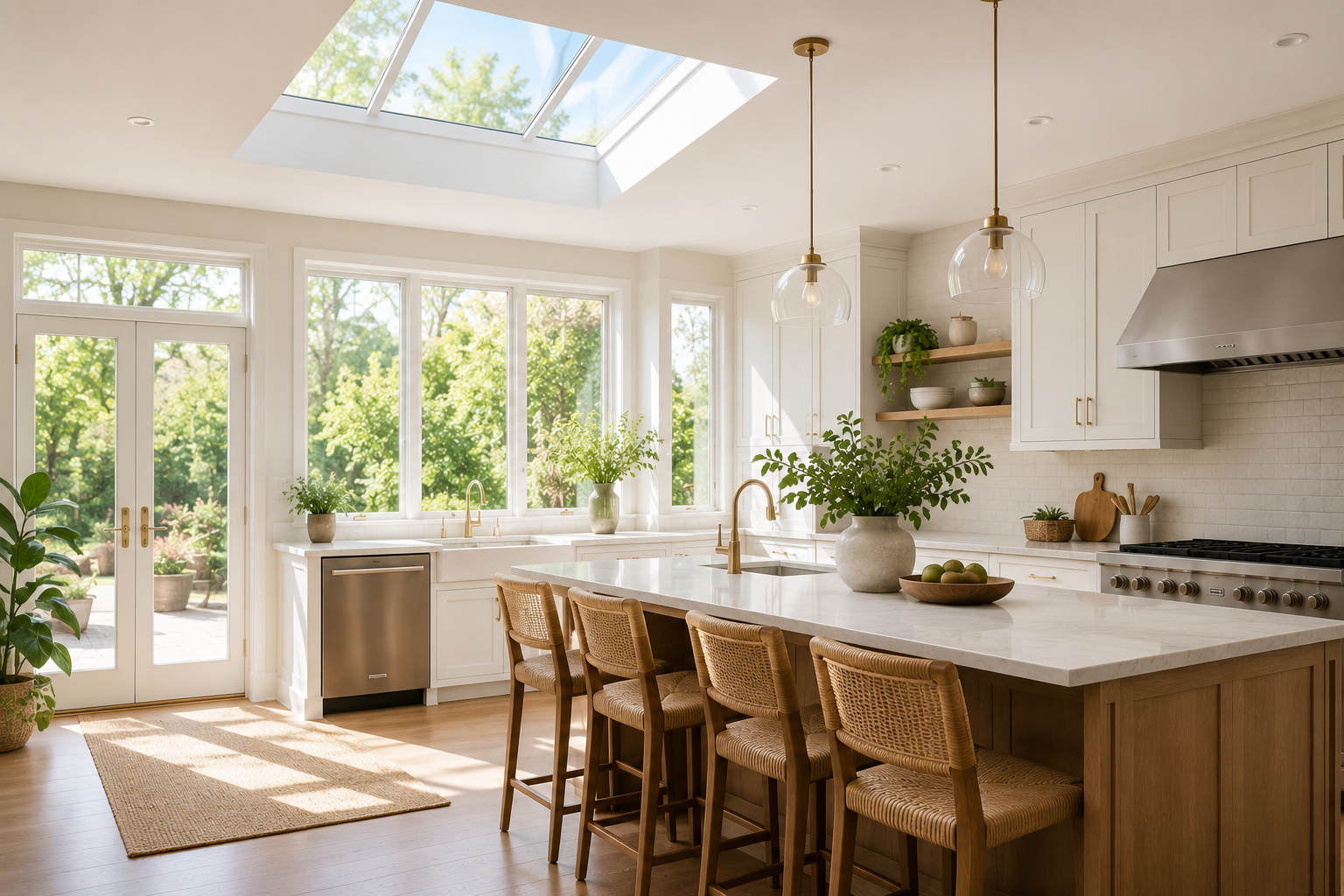
Structural Approaches to More Natural Light
Enlarging or Adding Windows
The most direct way to bring more natural light into a kitchen is to increase the glazed area. If the kitchen has a window that could be widened or lowered, or a wall that could accommodate a new window, this is the highest-impact change available. Even an increase in window width of 20 to 30 percent makes a noticeable difference in how the room feels throughout the day.
Glazed Rear Doors
Replacing a solid rear door with a full-glazed or half-glazed door is a relatively minor structural change that can significantly increase the amount of daylight entering a rear-facing kitchen. Bifold or sliding doors that open the entire rear wall to the garden are the premium version of this approach and are particularly effective in kitchens that flow into a dining or family room, where the whole combined space benefits.
Skylights and Roof Lights
For kitchens built into a single-storey rear extension, or where overhead structural options exist, a roof lantern or flat roof light is one of the most powerful natural light additions available. Light from above is diffuse and consistent throughout the day, without the shadows and directional variation that a side window creates. It also avoids the privacy concerns associated with side or rear windows where neighbouring properties are close.
Removing Upper Cabinets Near the Window
One of the most common reasons a kitchen feels darker than its window size would suggest is upper cabinetry positioned too close to the window, blocking the arc of incoming light before it can travel across the room. Removing the upper cabinets on either side of a window, or replacing them with open shelving or no storage at all, allows light to spread freely across the counter below rather than being absorbed by cabinet faces.
This approach works particularly well on the wall immediately adjacent to a window or patio door. The countertop surface below becomes bright and inviting, and the visual connection between the interior and the exterior is strengthened. The storage loss from removing those two or three upper cabinet units can usually be compensated for elsewhere in the layout.
Using Surfaces to Amplify Available Light
The surfaces that surround a kitchen's windows and the materials used throughout the room have a significant influence on how far natural light travels once it enters. A lighter colour palette in whites, soft creams, light greys, and pale greens reflects daylight rather than absorbing it, effectively amplifying what the windows bring in.
The use of reflective materials such as polished stone countertops, gloss cabinet finishes, and metallic accents picks up and bounces light across the room in a way that matte and dark surfaces cannot, creating a brighter overall effect from the same amount of incoming daylight.
A light-toned backsplash in a glossy white, pale stone, or reflective glass tile positioned behind the sink or cooktop area is particularly effective because it sits directly in the path of incoming window light and sends it back into the room.
Glass-Fronted Cabinetry
Upper cabinets with glass fronts reduce the visual mass of the cabinet run and allow light to pass through or reflect off the contents inside, which creates a sense of openness that solid cabinet fronts cannot. Glass-fronted upper cabinets are particularly effective on either side of a window, where they allow the wall to feel lighter and more connected to the incoming daylight without the full commitment of removing storage entirely.
Keeping the Window Area Clear
Window sills and the countertop below windows are frequently used as storage for bottles, plants, utensils, and small appliances. Every item placed in this zone reduces the amount of light entering the room and narrows the perceived connection between inside and outside. Keeping the window area completely clear of obstructions is a simple, cost-free change that immediately improves how much daylight the kitchen receives.
This is also true of window dressings. Heavy curtains or blinds that cover more of the window than necessary at any given time of day reduce incoming light significantly. Where privacy is needed, a frosted or textured lower panel on the glass provides coverage while leaving the upper portion of the window unobstructed.
Open-Plan Layouts
Removing a partition wall between a dark kitchen and an adjacent brighter room is one of the most transformative changes available. Open-concept kitchen layouts allow daylight from windows in adjacent rooms to reach areas of the kitchen that previously had no direct window access, dramatically changing how the whole space feels.
Supplementing natural light with the right lighting in the kitchen is also worth considering in tandem, since daylight varies through the day and season, and artificial lighting that mimics daylight colour temperature fills in the gaps without undermining the bright, airy atmosphere the natural light creates.
Frequently Asked Questions
Does kitchen size affect how much natural light it receives?
Layout matters more than size. A small kitchen with a well-placed window and light-reflecting surfaces can feel brighter than a larger kitchen with a small window and dark finishes. The direction the window faces is also significant: south and west-facing kitchens receive more direct sunlight than north-facing ones in the northern hemisphere.
What is the best window type for a kitchen?
Casement windows that open fully provide good ventilation alongside light. Larger fixed windows or sliding doors maximise the glazed area and are the best choice for light alone. Skylights are ideal where wall window options are limited, as they deliver consistent top-down light without privacy concerns.
Can I add a skylight to a kitchen ceiling?
Yes, if the structure above allows for it. Single-storey rear extensions and flat roof areas are the most common locations. A structural engineer and planning advice may be needed depending on location and the extent of the work. The return in terms of light quality is usually significant for dark kitchens.
How do mirrors help with natural light in a kitchen?
A mirror or mirrored splashback positioned on a wall opposite a window reflects incoming light back across the room, effectively doubling the apparent brightness. This is a cost-effective option for renters or homeowners who cannot make structural changes.
Do gloss kitchen cabinets really make a room brighter?
Yes, meaningfully so. High-gloss cabinet fronts reflect light across the room in a way that satin and matte finishes do not. The difference is most noticeable in kitchens with moderate rather than generous natural light, where the reflective quality of the surfaces can partially compensate for a limited glazed area.
The Bottom Line
Adding natural light to a kitchen can be as significant as a structural extension or as simple as clearing the windowsill and changing the cabinet finish. The best approach depends on budget, structure, and how dramatic a change is needed.
Kitchen Discounters works with homeowners to design kitchens that make the most of available light through cabinetry choices, layout, and material selection. If your kitchen feels darker than it should, a design consultation is a useful starting point.