
What Cabinet Door Styles Are Most Popular for Kitchen Renovations?
Cabinet doors cover more visual surface area than any other element in a kitchen. They define whether the space reads as traditional, transitional, contemporary, or something else entirely, and they are the first thing anyone sees when they walk in. Getting the door style right sets the aesthetic tone that every other decision, countertop choice, hardware selection, backsplash material, flows from and responds to.
The range of available door styles runs from simple flat panels to elaborately detailed raised profiles, with dozens of variations in between. Understanding what the most popular styles actually look like, what makes each one suit specific kitchen types, and how they interact with the other elements of the kitchen design helps homeowners make a decision that they will be satisfied with for decades rather than one that follows a trend they will grow tired of.
Quick Answer: The most popular cabinet door styles in kitchen renovations today are the Shaker style, which accounts for a significant majority of residential kitchen cabinetry; flat-panel or slab doors for contemporary kitchens; raised-panel doors for more traditional designs; and beadboard or inset panels for cottage and farmhouse aesthetics. Shaker's dominance reflects its versatility: it suits transitional, modern farmhouse, and classic designs equally well and has remained consistently popular for over a decade.
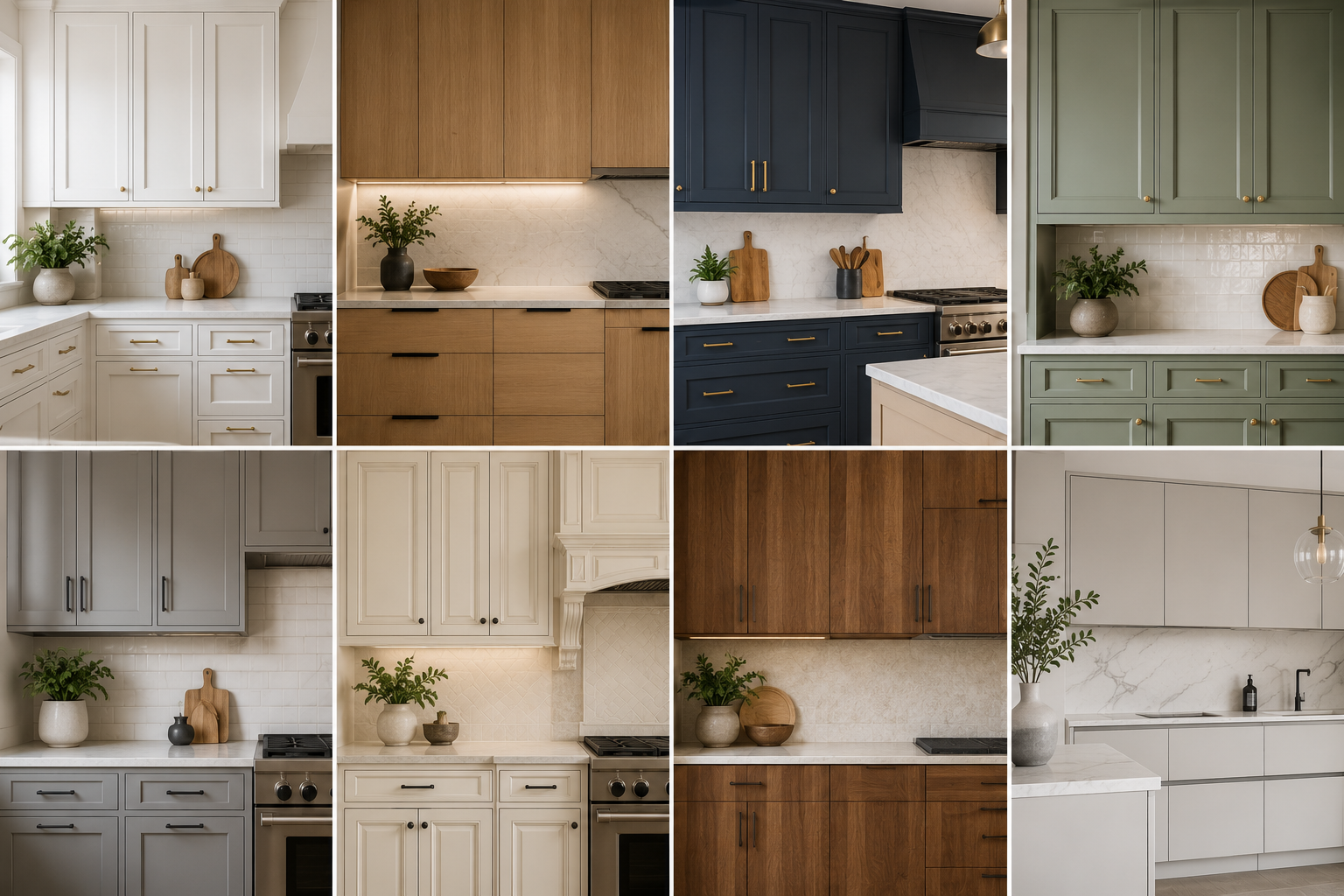
Shaker: The Default Choice for Good Reason
Shaker cabinet doors are defined by their construction: a simple frame of four rails and stiles surrounding a flat recessed centre panel. The profile is clean, geometric, and free of decoration beyond the structural lines of the frame itself. This simplicity is the source of the style's remarkable versatility: it reads as classic without being ornate, contemporary without being stark, and fits equally well in a farmhouse kitchen, a transitional suburban kitchen, and a modern urban space.
The sustained popularity of Shaker across ten-plus years of kitchen design is not simply trend inertia. It is the appropriate default for homeowners who want a kitchen that will not feel dated within five years, who want a style that pairs with a wide range of countertop and hardware options, and who are not making a deliberate statement with their kitchen aesthetic in either a traditional or a contemporary direction. When in doubt, Shaker is almost always the right choice.
Shaker is available in painted finishes (white, grey, navy, and sage have all been particularly popular), stained wood, and thermofoil or laminate in a range of colours. The construction is straightforward enough that quality is relatively consistent across price points, though the frame-to-panel proportions vary between manufacturers and affect how the door looks in practice.
Flat-Panel and Slab Doors: The Contemporary Option
Flat-panel doors have no frame at all: a single flush piece of material forms the entire door face. This absolute simplicity is the most contemporary look available in cabinetry and is the defining feature of sleek European-influenced kitchen design. When executed in a matte finish with integrated or minimal hardware, flat-panel doors create the seamless appearance that high-end contemporary kitchens are built around.
The practical consideration with flat-panel doors is that the material quality and finish are fully exposed with no frame to provide relief or distraction. Small imperfections, variations in sheen, and surface blemishes are more visible on a flat panel than on a framed door. Quality matters more at this style than at almost any other.
Flat-panel doors also require very precise installation because any gap or misalignment between adjacent doors is immediately visible with no overlapping frame to mask small errors. They suit skilled cabinetmakers and careful installation standards rather than budget-tier production cabinetry.
Raised-Panel Doors: Traditional Character
Raised-panel doors have a centre panel that sits proud of the surrounding frame, creating depth and shadow lines that give the door a decorative, three-dimensional character. The profile of the raised panel, whether it is a simple arched cathedral top, a ogee profile, or a more elaborate decorative shape, varies the degree of formality from traditional to highly ornate.
Raised-panel doors are the defining style of classic American kitchen cabinetry as it dominated through the 1980s and 1990s, which gives them both a legacy of quality association and a recent association with designs that feel dated. In kitchens aiming for a genuinely traditional aesthetic, well-proportioned raised-panel doors in a quality hardwood remain a strong choice. In contemporary renovations, they are generally being replaced by Shaker or flat-panel alternatives.
The choice of door style is deeply connected to the overall design direction, which is why exploring current kitchen design trends alongside door style options helps homeowners understand whether the style they are drawn to aligns with a broader aesthetic vision or sits in tension with the other choices they are making.
Inset Doors: Premium Construction
Inset doors are set flush within the cabinet frame rather than overlapping it, which requires much more precise construction: the door and the frame must be machined to extremely tight tolerances for the gap to be even around the entire perimeter. The aesthetic result is furniture-quality craftsmanship, a look associated with heirloom cabinetry and high-end custom kitchens.
Inset construction is available with both Shaker and raised-panel profiles and adds significant cost because of the precision required. It is worth the investment for homeowners who want a kitchen that reads as genuinely bespoke rather than production cabinetry, and who understand that the quality of the construction itself is part of what they are paying for.
Beadboard and Other Specialty Profiles
Beadboard panels, which feature vertical grooves running the height of the door centre panel, are associated with cottage, farmhouse, and coastal design aesthetics. They add textural interest to the door while remaining relatively simple in overall form. Beadboard cabinet doors work particularly well on lower cabinets, on kitchen islands, and in spaces where the style suits the overall character of the home.
Glass-front doors, whether clear, seeded, or frosted, are not a door style in the same way as the above but are an important variation: they suit upper cabinets in traditional and transitional kitchens, break up the visual weight of an all-opaque cabinet run, and suit the display of glassware and dishware the homeowner wants to show. The same frame style used elsewhere in the kitchen is typically maintained with glass inserts.
How to Choose Between Styles
The most reliable approach to choosing a cabinet door style is to narrow the decision to two options that genuinely suit the kitchen's overall aesthetic direction, then look at them at scale, on a full-size sample or in a showroom, rather than from a small chip. Cabinetry styles and finishes should always be evaluated in the context of the countertop material, the hardware finish, and the flooring rather than in isolation, because these elements interact visually in ways that are not apparent from individual samples.
Understanding matching countertops to cabinets is part of the same design decision: a heavily veined quartzite countertop calls for a simpler door style that does not compete with it, while a clean white quartz surface can support more detail in the cabinetry above and below it.
Door style is also a significant factor in budgeting for a renovation because the cost difference between a production Shaker door and a custom inset door in the same kitchen can be substantial, and understanding where that budget is best invested helps prioritise the choices that matter most.
Frequently Asked Questions
Is Shaker style going out of fashion?
Shaker has been the dominant kitchen cabinet style for over a decade and shows no sign of serious decline. Its versatility across different aesthetics is what sustains its popularity: it does not belong to a specific trend moment the way highly ornate raised-panel styles did in the 1990s. Shaker will remain a safe and timeless choice for the foreseeable future.
What cabinet door style works best for a small kitchen?
Flat-panel and Shaker doors in lighter colours visually expand a small kitchen more than raised-panel styles, which add visual weight through their decorative profiles. Glass-front upper cabinets also help open a small kitchen by creating depth rather than a solid wall of cabinet faces.
Can I mix cabinet door styles in the same kitchen?
Yes, and this is increasingly common. A popular approach is using Shaker upper cabinets with flat-panel lowers, or combining glass-front uppers with solid Shaker lowers. Mixing the same door profile in different finishes, painted uppers and wood lowers for example, also creates visual interest without introducing conflicting profiles.
Does the cabinet door style affect the resale value of my home?
Broadly contemporary or transitional styles like Shaker and flat-panel appeal to the widest buyer pool and support the strongest resale perception. Very ornate or very dated door styles can work against a kitchen's appeal to buyers who would otherwise pay a premium for an updated kitchen. Choosing a style with broad appeal over one that serves only a specific aesthetic is relevant if resale is a significant consideration.
What hardware works with each door style?
Shaker suits both bar pulls and cup pulls equally well; flat-panel doors typically use integrated handles, bar pulls, or no hardware at all; raised-panel doors traditionally pair with bin pulls, cup pulls, or decorative knobs that match the period character of the style. Hardware finish should be consistent across the kitchen for a resolved appearance.
The Bottom Line
Cabinet door style sets the visual foundation of the entire kitchen. Shaker is the most popular and most versatile choice for good reason. Flat-panel suits contemporary design. Raised-panel suits traditional aesthetics. Inset construction adds heirloom quality to any profile. The right choice aligns with the overall design direction, the countertop and hardware choices, and the budget available for the cabinetry.
Kitchen Discounters carries a comprehensive range of cabinet door styles and finishes with in-person design guidance to help you find the right combination for your kitchen. Visit or get in touch to explore the options.