
How to Choose Between a Walk-In Shower and a Bathtub
A bathroom remodel often comes down to one big decision: keep a bathtub, switch to a walk-in shower, or find room for both. The choice shapes the layout, the budget, and how comfortable the room feels for years to come.
There is no single right answer. A busy family with young kids, a couple planning to age in place, and a homeowner preparing to sell may all reach different conclusions, so it helps to weigh how each option fits your space and daily routine.
Quick Answer: Choose a walk-in shower if you want easier access, a modern look, and better use of a small bathroom. Choose a bathtub if you bathe young children, enjoy soaking, or need at least one tub in the home for resale. In larger bathrooms, including both is often the best solution.
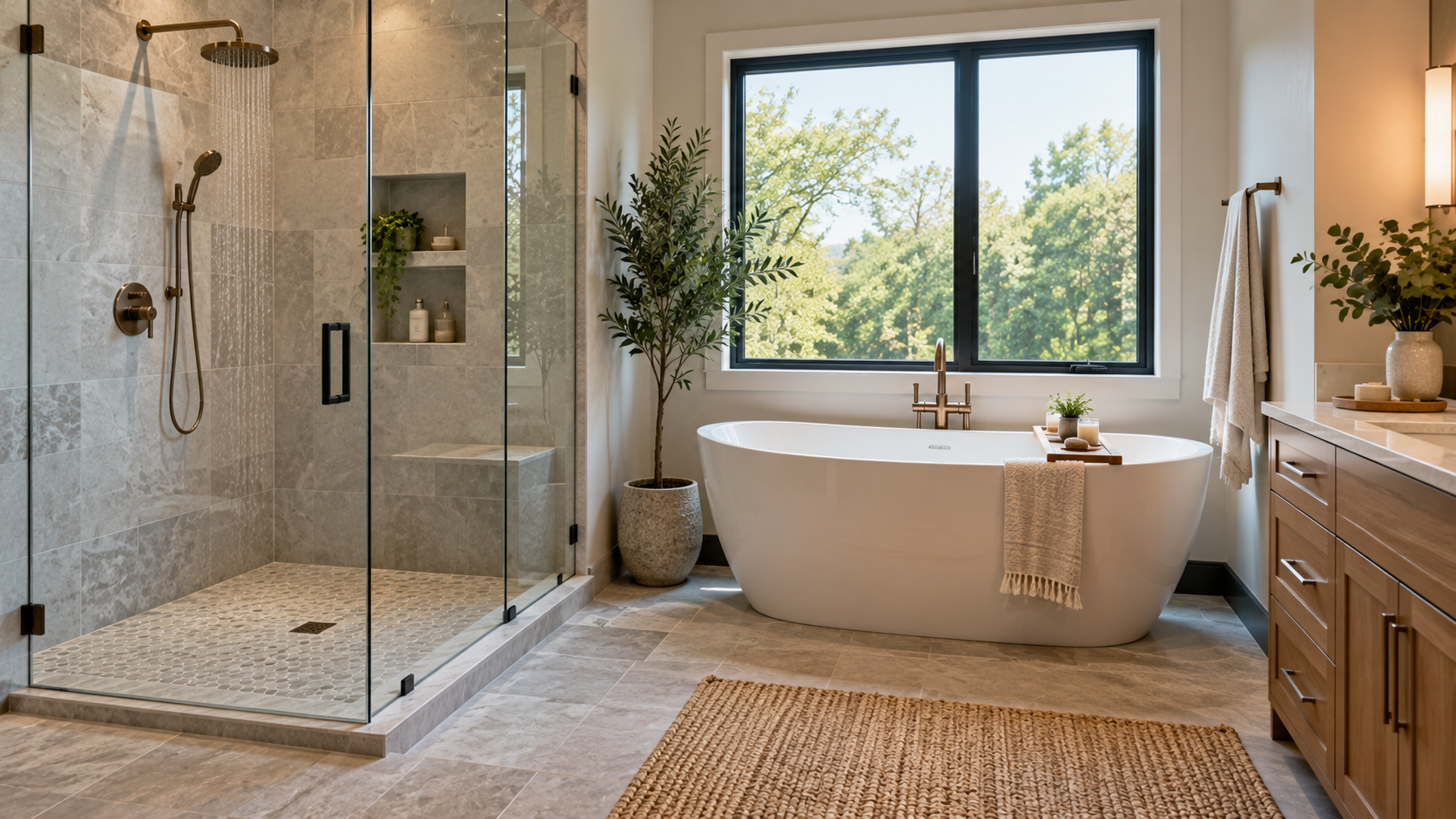
What Are the Benefits of a Walk-In Shower?
Walk-in showers are easy to step into, with a low or no threshold that reduces tripping risk. That makes them a popular choice for homeowners planning to stay put as they age, and they fit well with universal design principles that make a home easier to use at every age.
They also make a bathroom feel larger. Clear glass panels and continuous floor tile open up the room visually, which helps a lot in a small bathroom layout.
Walk-in showers offer plenty of room for personalization, too. Built-in niches, benches, grab bars, handheld sprayers, and multiple shower heads can all be planned into the design.
What Are the Drawbacks of a Walk-In Shower?
Without a tub, bathing small children gets harder, and anyone who enjoys a long soak loses that option. Zero-threshold showers also need careful planning for floor slope and drainage so water stays where it belongs.
Glass enclosures need regular cleaning to prevent water spots and soap film. Large tiled showers can also cost more than a standard tub, depending on materials and features.
What Are the Benefits of a Bathtub?
A bathtub is the practical choice for families with babies and young children, since bath time is far easier in a tub. It is also the only option for people who enjoy a relaxing soak.
Tubs can do double duty. A tub with a shower overhead offers both functions in a compact space, which is why tub and shower combinations remain common in hall bathrooms.
In larger primary bathrooms, a freestanding soaking tub can also become a design centerpiece that gives the room a spa-like feel.
What Are the Drawbacks of a Bathtub?
Stepping over a tub wall can be difficult for older adults or anyone with limited mobility, and a wet tub floor can be slippery. As needs change, a tub can turn from a feature into a barrier.
Tubs also take up space. In a small bathroom, a full-size tub can crowd the room, and many people who own one rarely use it for actual baths.
Does Removing a Bathtub Hurt Resale Value?
It can, depending on the home. Many real estate professionals suggest keeping at least one bathtub in the house, since buyers with young children often look for one. Removing the only tub can narrow your pool of interested buyers.
Converting the tub in a primary bathroom is usually less of a concern when another bathroom still has one. Knowing which bathroom upgrades add the most value helps you balance your own comfort with future resale.
How Do You Decide What Fits Your Bathroom?
A few practical questions usually point to the right answer:
• Who uses this bathroom every day, and does anyone need easier access?
• Are there young children who need bath time?
• Is there another tub somewhere in the home?
• How much space do you have, and would a tub crowd the room?
• How long do you plan to stay in the house?
Budget matters too. Comparing the average cost of a bathroom remodel in Illinois with the features you want sets realistic expectations before design begins. If space allows, a separate shower and tub may settle the debate entirely.
Plan storage at the same time. Built-in niches and well-placed cabinetry can improve bathroom storage without taking floor space away from the shower or tub.
Frequently Asked Questions
Is a walk-in shower better than a bathtub?
Neither is better for everyone. A walk-in shower offers easier access and a modern look, while a bathtub suits families with young children and people who enjoy soaking. The right choice depends on who uses the bathroom and how.
Can a bathtub be converted into a walk-in shower?
Yes, tub-to-shower conversions are a common remodeling project. The tub is removed and replaced with a shower base or tiled floor, walls, and glass. Plumbing and drainage may need adjustments depending on the layout.
Should every house have at least one bathtub?
Many real estate professionals recommend keeping at least one tub for resale, especially in homes likely to attract families. If your home has only one tub, think carefully before removing it.
Are walk-in showers safer for seniors?
Walk-in showers with low or no thresholds are generally easier and safer to enter than stepping over a tub wall. Grab bars, a bench, and slip-resistant flooring improve safety even further.
Can a small bathroom fit both a tub and a shower?
A tub and shower combination is the most common way to have both in a small bathroom. A separate tub and walk-in shower usually require a larger primary bathroom.
Conclusion
Choosing between a walk-in shower and a bathtub comes down to who uses the room, how much space you have, and how long you plan to stay. A walk-in shower favors access and openness, a tub favors families and relaxation, and larger bathrooms may fit both.
Kitchen Discounters handles bathroom remodeling from powder room updates to full primary baths, using computer-aided design to show your options before work begins. If you are weighing a shower against a tub, schedule a consultation to see how each fits your space.