
Tile vs Hardwood Flooring in a Kitchen: Pros and Cons
Kitchen floors take more abuse than almost any surface in the home. They deal with dropped pans, spilled water, muddy shoes, pet claws, and long hours of standing while you cook, all while setting the tone for the entire room.
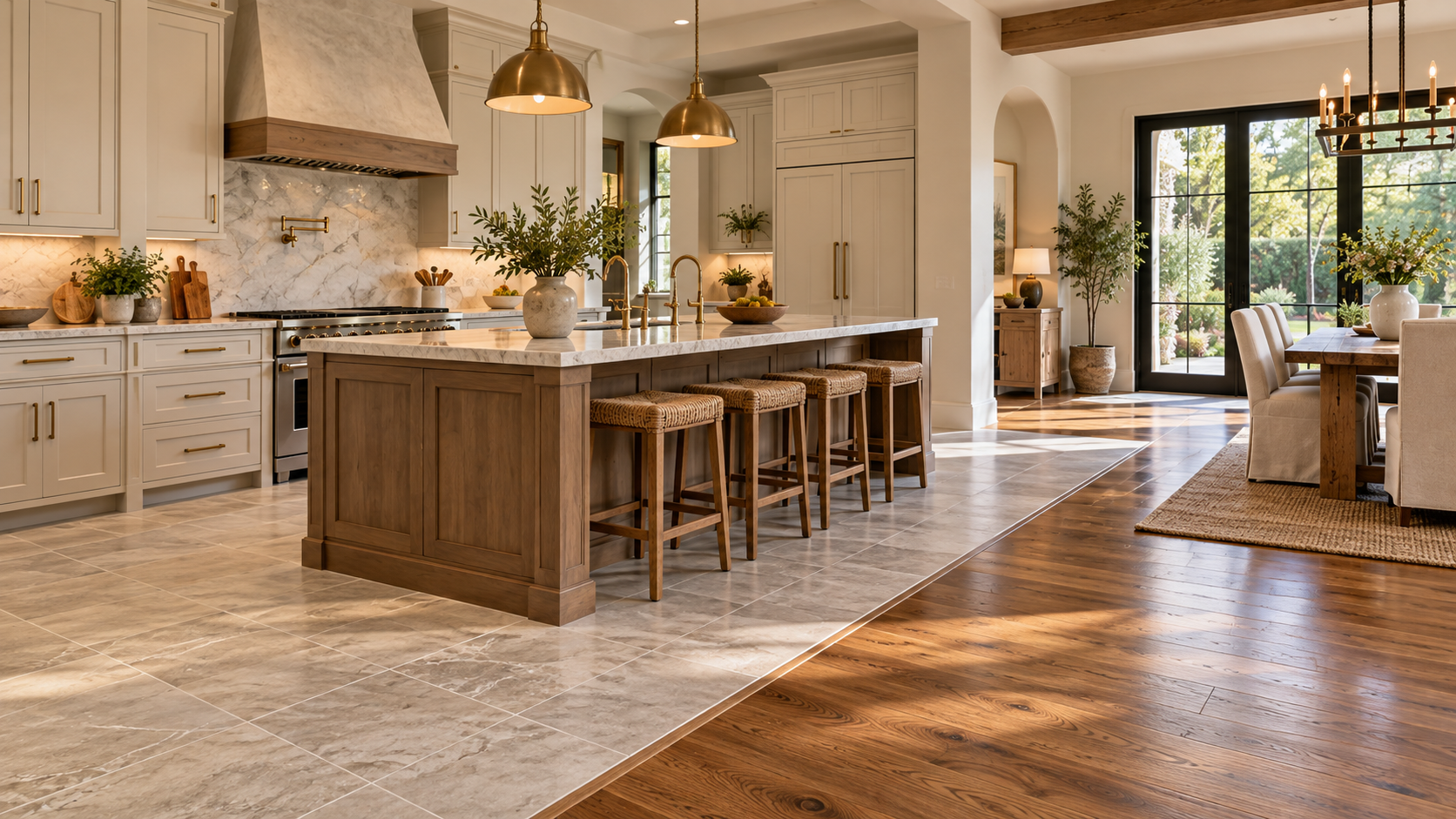
Tile and hardwood are two of the most popular choices, and both can look beautiful in a kitchen. They behave very differently, though, especially around water, comfort, and long-term upkeep, so the right pick depends on how your household uses the space.
Quick Answer: Tile is the more water-resistant and durable choice for a busy kitchen, handling spills, pets, and heavy traffic with little worry. Hardwood feels warmer and softer underfoot and blends easily into open living areas, but it needs more care around moisture. Choose tile for maximum durability and hardwood for warmth and continuity.
What Are the Pros of Tile Flooring in a Kitchen?
Porcelain and ceramic tile are highly resistant to water, which makes them a natural fit near sinks, dishwashers, and refrigerators with water lines. Spills wipe up without seeping into the floor.
Tile is also extremely durable. It resists scratches from pet claws and chairs, holds up to heavy foot traffic, and can last for decades with basic care. That toughness is why tile often ranks among the best flooring for heavy traffic in a kitchen.
Design flexibility is another strength. Tile comes in countless sizes, colors, and finishes, including wood-look porcelain planks that capture the feel of hardwood with the toughness of tile.
What Are the Cons of Tile Flooring?
Tile is hard underfoot. Standing on it for long periods can be tiring, and dropped dishes are more likely to break. Many homeowners add cushioned mats in prep areas to help.
It can also feel cold, especially during Illinois winters, unless radiant heating is installed underneath. Grout lines need periodic cleaning and sealing to stay fresh, and installation takes longer than many other floors because of setting and curing time.
What Are the Pros of Hardwood Flooring in a Kitchen?
Hardwood brings natural character that many homeowners love. It is one of the easiest ways to add warmth to a modern kitchen, softening hard surfaces like stone countertops and stainless appliances.
It is also more forgiving underfoot than tile, so long cooking sessions feel more comfortable. In open floor plans, running the same hardwood from the kitchen into the living and dining areas creates a seamless, connected look.
Solid hardwood can be sanded and refinished several times over its life, so surface wear and scratches do not have to be permanent.
What Are the Cons of Hardwood Flooring?
Water is hardwood's main weakness. Standing water, slow leaks, or repeated spills can cause cupping, staining, or warping, so spills need quick cleanup and sink or dishwasher leaks need to be caught early.
Hardwood also scratches and dents more easily than tile, which matters in homes with pets, kids, or heavy chairs. A tough finish helps, but the floor will still show wear and need occasional refinishing.
How Do Tile and Hardwood Compare Side by Side?
Here is how the two floors stack up on the factors that matter most in a kitchen.
• Water resistance: tile handles spills and leaks far better than hardwood.
• Durability: tile resists scratches and dents, while hardwood shows wear but can be refinished.
• Comfort: hardwood feels warmer and softer underfoot.
• Maintenance: tile needs grout care, while hardwood needs fast spill cleanup and periodic refinishing.
• Style: tile offers more patterns and formats, while hardwood adds natural warmth and flows easily into other rooms.
Cost varies widely within both categories depending on material, size, and installation, so comparing specific products is more useful than comparing the categories alone.
Which Flooring Is Better for Your Household?
Tile is usually the better choice for households with young children, pets, or a lot of cooking and cleanup. If a kid-friendly kitchen is the goal, a floor that shrugs off spills and scratches removes a lot of daily stress.
Hardwood makes more sense when the kitchen opens into living spaces with existing wood floors, or when comfort and warmth matter most and the household is careful with spills.
If you love the look of wood but worry about water, wood-look porcelain tile is a strong middle ground. Some homeowners also weigh hardwood against luxury vinyl plank, which offers a wood appearance with better water resistance.
Frequently Asked Questions
Is tile or hardwood better for a kitchen with pets?
Tile is usually better for homes with pets. It resists scratches from claws and handles water bowls and accidents without damage. Hardwood can work but will show wear sooner.
Can hardwood flooring be installed in a kitchen?
Yes, hardwood is commonly installed in kitchens. It needs prompt cleanup of spills and attention to leaks around sinks and appliances. A durable finish helps protect it from daily wear.
Does tile or hardwood add more value to a home?
Both can add appeal when they suit the home and are installed well. Hardwood is popular with many buyers, while tile is valued for durability in kitchens and bathrooms. Quality and fit with the rest of the house matter more than the material alone.
Is tile flooring cold in winter?
Tile can feel cold underfoot, especially in colder climates. Area rugs, mats, or radiant floor heating installed below the tile make it much more comfortable.
What is wood-look tile?
Wood-look tile is porcelain tile designed to resemble hardwood planks in color and grain. It offers the appearance of wood with the water resistance and durability of tile, which makes it popular in kitchens.
Conclusion
Tile and hardwood both work in a kitchen, but they serve different priorities. Tile wins on water resistance and durability, while hardwood offers warmth, comfort, and an easy flow into nearby rooms.
Kitchen Discounters installs tile and wood flooring as part of kitchen and bathroom remodels, backed by a carefully screened installation team. If you are deciding between the two, get in touch with the showroom to compare options in person.