
How to Organize a Pantry with Custom Built-In Storage
A pantry should make cooking easier, yet many turn into the most cluttered space in the house. Deep shelves hide expired cans, snacks spill into every corner, and the same item gets bought twice because no one could see the first one.
The problem is rarely the amount of space. It is how that space is set up. Fixed shelves at one depth and one height seldom fit the real mix of cereal boxes, baking supplies, small appliances, and bulk items a household stores.
Quick Answer: To organize a pantry with custom built-in storage, sort what you own first, then design shelving around those items instead of the other way around. Use adjustable shelves, shallow depths for cans and jars, pull-out drawers down low, and separate zones for daily, weekly, and bulk items. Built-ins keep that system in place for the long term.
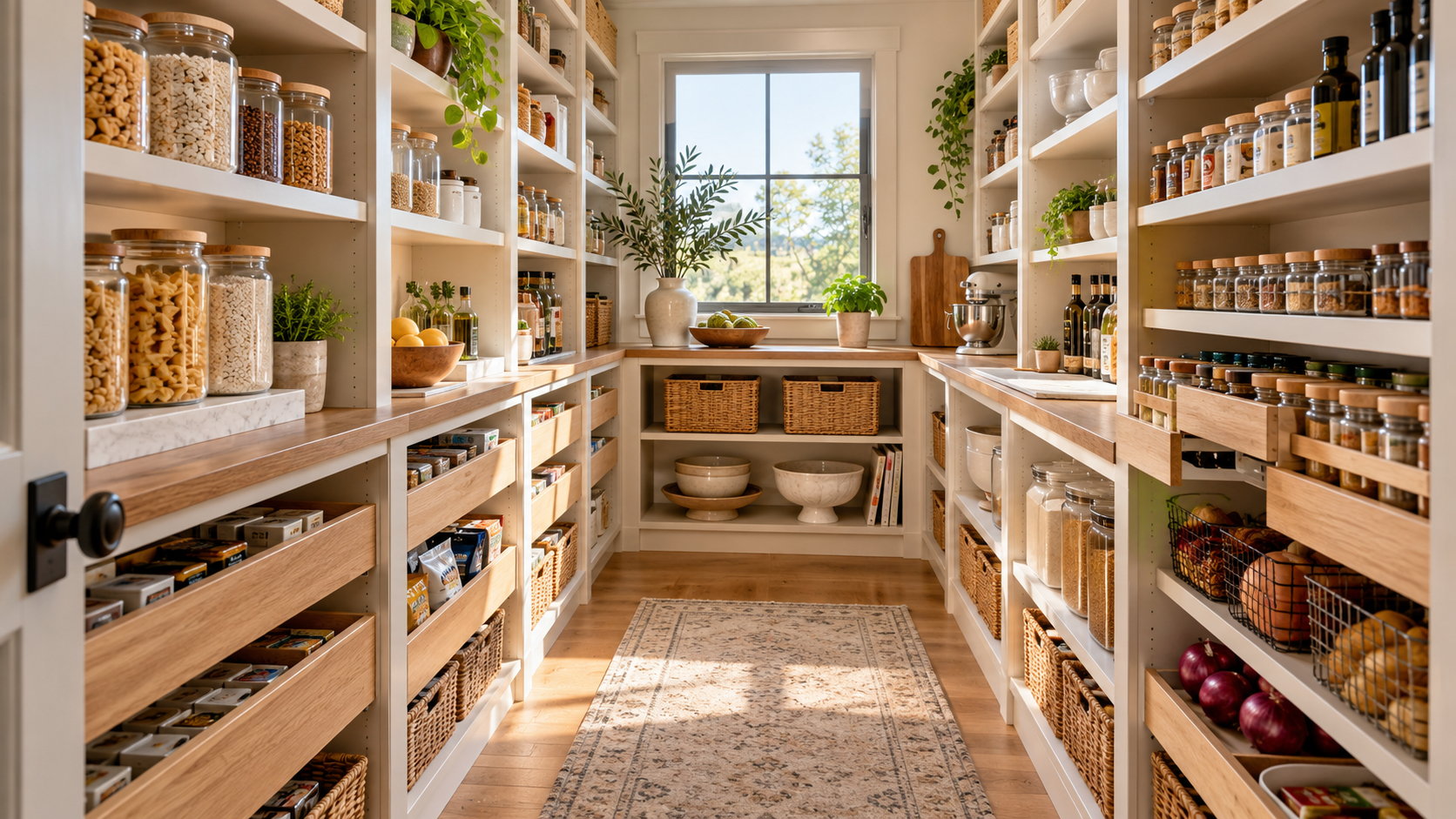
Why Do Built-In Systems Work Better Than Freestanding Shelves?
Freestanding shelving units come in fixed sizes, so they rarely use a pantry's full height or width. Gaps at the top, sides, and corners become dead space, and loaded units can wobble or shift.
Built-in storage is designed for the exact room. Shelves run wall to wall, heights match what you store, and drawers or baskets sit right where they are easiest to reach. The result looks cleaner and holds more in the same footprint.
How Do You Plan a Pantry Layout Before Building?
Start by emptying the pantry and grouping everything by type: canned goods, grains and pasta, baking supplies, snacks, oils and spices, small appliances, and bulk backups. This shows how much of each category you actually need to store.
Next, think about frequency. Items used every day belong between waist and eye level, weekly items can sit slightly higher or lower, and bulk or seasonal items can go on top shelves or the floor. That simple ranking shapes the whole layout.
Measure the space carefully, including the door swing, outlets, and lighting. Those details decide where deep shelves, drawers, or an appliance zone will fit.
Which Built-In Features Make a Pantry Easier to Use?
The most functional pantry features focus on visibility and reach. When you can see everything at a glance, you waste less food and spend less time searching.
- Adjustable shelves that move as your storage needs change.
- Shallow shelves for cans, jars, and spices, so nothing hides behind something else.
- Pull-out drawers or baskets for low storage, produce, and snacks.
- A counter-height zone for small appliances or a breakfast station.
- Vertical dividers for baking sheets, cutting boards, and trays.
A dedicated appliance zone also keeps the main kitchen clear. Moving mixers, air fryers, and toasters into the pantry is one of the easiest ways to hide small appliances without losing quick access.
How Do You Organize Different Types of Pantries?
The right layout depends on the kind of pantry you have, since each one comes with its own challenges.
Reach-In Pantries
In a reach-in pantry, depth is the main challenge. Shallow shelves or door-mounted racks keep items from disappearing at the back, and pull-out drawers at the bottom make low storage actually usable.
Walk-In Pantries
A walk-in pantry has room for zones. Shelving along two or three walls, a counter for appliances, and drawers below can turn it into a second prep area, while corner shelving keeps the back corners from becoming dead space.
Cabinet Pantries
When there is no separate room, tall pantry cabinets with roll-out shelves hold a surprising amount. They suit smaller kitchens and pair naturally with other clutter-free storage solutions.
What Materials Work Best for Custom Pantry Shelving?
Pantry shelving has to handle weight, spills, and constant use. Laminate and engineered panels are popular because they resist stains, wipe clean easily, and come in many colors that can match or contrast with the kitchen.
Kitchen Discounters offers custom pantry systems by CLOzX in thermally fused laminate and thermo-structured surface panels. Both are built for durability and low maintenance, with a wide range of colors, textures, hardware, and accessories.
How Do You Keep a Pantry Organized After It Is Built?
Clear containers and labels make a big difference, especially for dry goods like flour, rice, and cereal. They show at a glance what is running low and stop half-open bags from spreading across shelves.
Store new items behind older ones so food gets used before it expires, and do a quick monthly check to catch anything that has drifted out of place.
Keep the zones consistent, too. When everyone in the household knows where snacks, baking supplies, and backups live, the system holds up far better. The same thinking works for mudroom locker systems and other storage built around daily routines.
Frequently Asked Questions
What is the best shelf depth for a pantry?
Shallow shelves around 12 inches deep work well for cans, jars, and boxes because items stay visible. Deeper shelves suit small appliances and bulk items. Many pantries combine both depths in different zones.
Is a custom built-in pantry worth the cost?
For many households, yes. Built-in systems use the full height and width of the space, reduce food waste, and make daily cooking easier. They also look cleaner and tend to last longer than freestanding units.
Can a small pantry benefit from custom storage?
Yes, small pantries often benefit the most because every inch matters. Adjustable shelves, door racks, and pull-out drawers can add a lot of usable storage to a reach-in or cabinet pantry.
Should small appliances go in the pantry?
If the pantry has an outlet and a counter-height surface, it can be a great spot for small appliances. This keeps kitchen counters clear while leaving appliances easy to grab. Leave enough clearance around each one for safe use.
How do I keep my pantry from getting cluttered again?
Use clear containers, labels, and set zones for each category. Store newer items behind older ones and check the shelves each month. A built-in layout designed around what you actually store makes this much easier to maintain.
Conclusion
Organizing a pantry with custom built-in storage starts with knowing what you store and how often you use it, then designing shelves, drawers, and zones around those habits. A system built for your space keeps food visible, counters clear, and daily cooking simpler.
Kitchen Discounters designs custom pantries, closets, and storage systems for homeowners in the Lake Zurich area, using computer-aided design to plan every shelf before installation. If your pantry needs a reset, reach out to the team to start planning.